
“Grace Makes the Soil”
The One Thing Soil Cannot Do
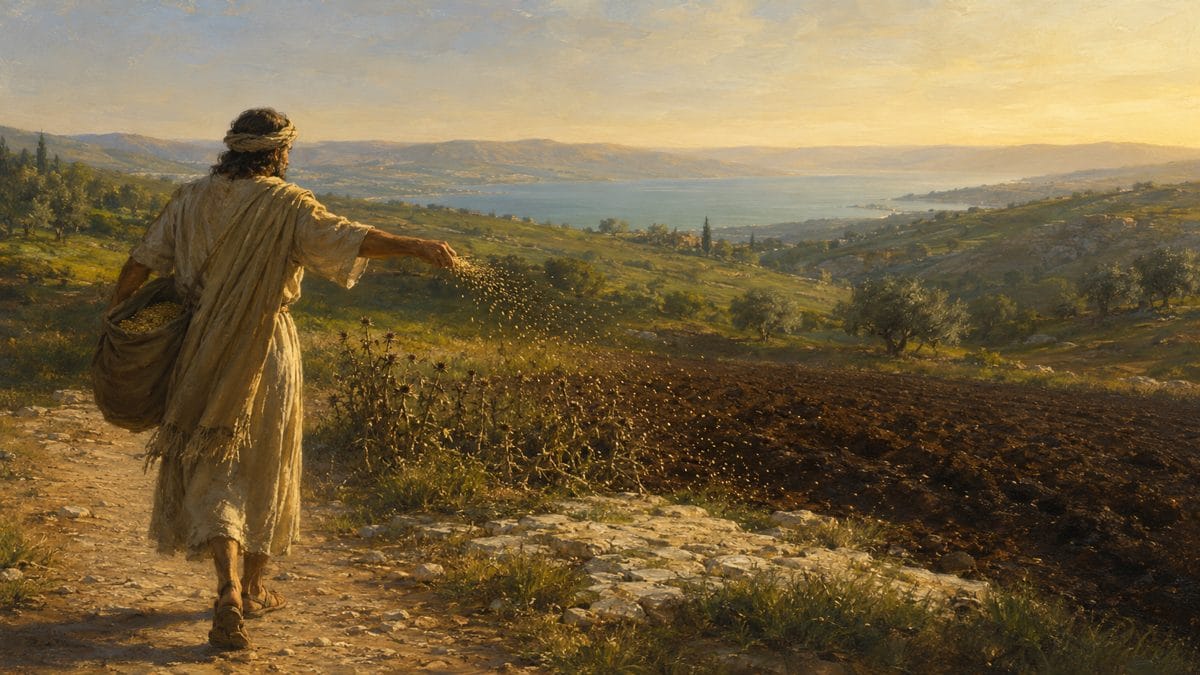
The crowd swells until there is nowhere left on the beach to stand, so Jesus climbs into a boat, pushes out a little from the shore, and sits down — the teacher’s posture — with the water carrying his voice back over the sand. That same day, Matthew says, he had walked out of a house thick with argument. Now, from the boat, he gives the shoreline the most ordinary story in Galilee. A sower goes out to sow, and the seed flies wide from his hand. Some falls on the beaten path that crosses the field, where it lies exposed until the birds drop down and take it. Some falls where a shelf of limestone runs under a skin of soil; it springs up almost overnight, then withers in the first hard sun, rootless. Some falls among thorns that grow faster than wheat and strangle it quietly. And some falls on dark, turned earth — and yields a hundredfold, sixty, thirty, numbers no farmer on that beach would dare put in a prayer.
Let anyone with ears listen! he calls — and hearers have been doing something strange with the story ever since. They hear it as an assignment. Four soils, one passing grade: stop being the path, stop being shallow, cut back the thorns, produce. Whole seasons of the life of faith have been built on that reading — the constant self-audit, the secret fear of being the wrong kind of ground, the resolve to do better this week than last.
But there is a quiet fact lying at the bottom of the parable, and it undoes that whole reading. No field has ever plowed itself. No ground has ever cleared its own stones, dug out its own thorns, or watered its own furrows. In the story, the soils do not act at all. They receive the seed, or they fail to hold it. Not one of them is commanded to do anything — because the one thing soil cannot do is improve itself.
Given, Not Earned
Every soil in the parable hears the word — the path hears, the rock hears, the thorny ground hears. What separates the good soil, Jesus says when he explains the story, is that it “hears the word and understands it.” And between the parable and its explanation, in verses the Sunday reading skips over, the disciples ask him why he teaches this way at all. His answer changes the grammar of everything that follows.
“To you it has been given to know the secrets of the kingdom of heaven.”Matthew 13:11 (NRSV)
Given. Not earned, not achieved, not white-knuckled into being. The very thing that makes good soil good — the understanding that lets the word take root and run all the way to harvest — arrives as a gift before it is ever a task. The good soil is not the valedictorian of the field, promoted for effort. It is ground that received something it could never have manufactured. Which means the exhausting religion of the self-audit was built on a misreading: the parable was never a performance review. It is a story about what happens to ground when seed is given to it — and about the Sower who keeps flinging seed onto paths and rock shelves and thorn patches as if he refuses to write off a single square foot of the field.
The Gardener’s Limit
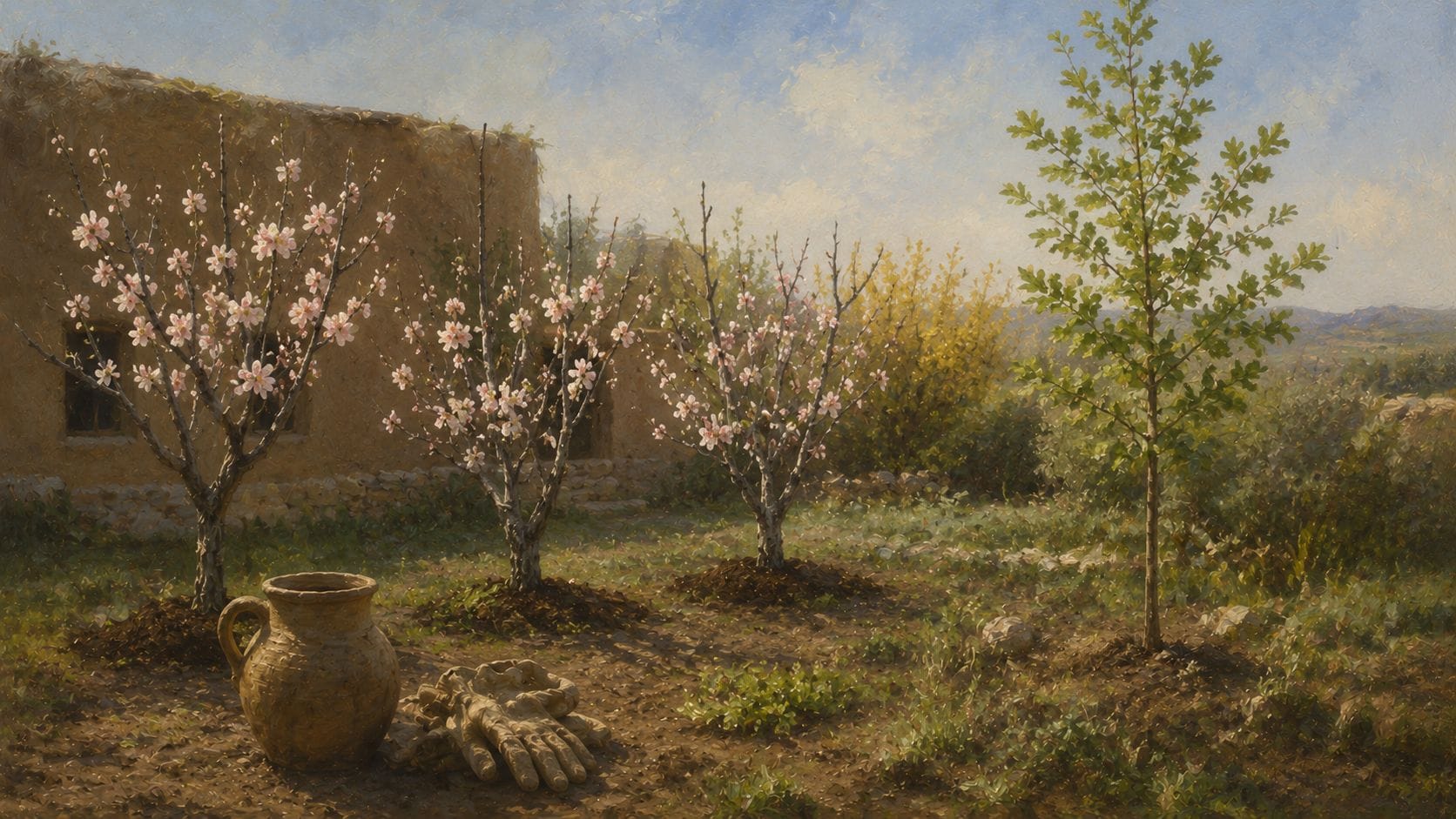
In a front yard in Roswell, New Mexico, three trees went into the ground a few years ago. The pastor who planted them has tended them ever since — watered them, mulched them, checked on them the way anyone checks on a thing they feel responsible for. And every winter, the trees frighten him. They stand bare and gray and brittle, and he has stopped in front of them more times than he can count, wondering whether this is the year they simply do not come back. Then every spring, without asking his permission and without rewarding his worry, they break out in blossom — flowers opening straight from the bare wood, branch after branch, alive the whole time.
Meanwhile, in the untended corners of the same yard, oak seedlings keep appearing — acorns the squirrels buried and forgot. Nobody planted them. Nobody watered them. Nobody stood over them in January wondering if they would survive. And every spring they stand twice as tall as the trees he planted and tended and worried over. Every spring he cuts them down; every next spring they are back.
It took seasons for the yard to finish its sermon, but the lesson finally landed: the growth was never really in his hands. The seed and the soil do their quiet work somewhere below a gardener’s reach. All the tending — real as it is, needed as it is — cannot make a single branch bloom or a single acorn sprout. An old letter to a quarreling church says it without decoration.
“I planted, Apollos watered, but God gave the growth. So neither the one who plants nor the one who waters is anything, but only God who gives the growth.”1 Corinthians 3:6–7 (NRSV)
And if that is true of trees, it is true of hearts. All the trying in the world cannot push the word of the kingdom one inch deeper into a human life.
The Rain That Does Not Ask
So is the parable’s word simply stop trying? Not quite. It is closer to: stop striving as though the harvest could be produced by the ground. The reading the church sets beside this Gospel is the old promise from the end of Israel’s exile, and it names where growth actually comes from.
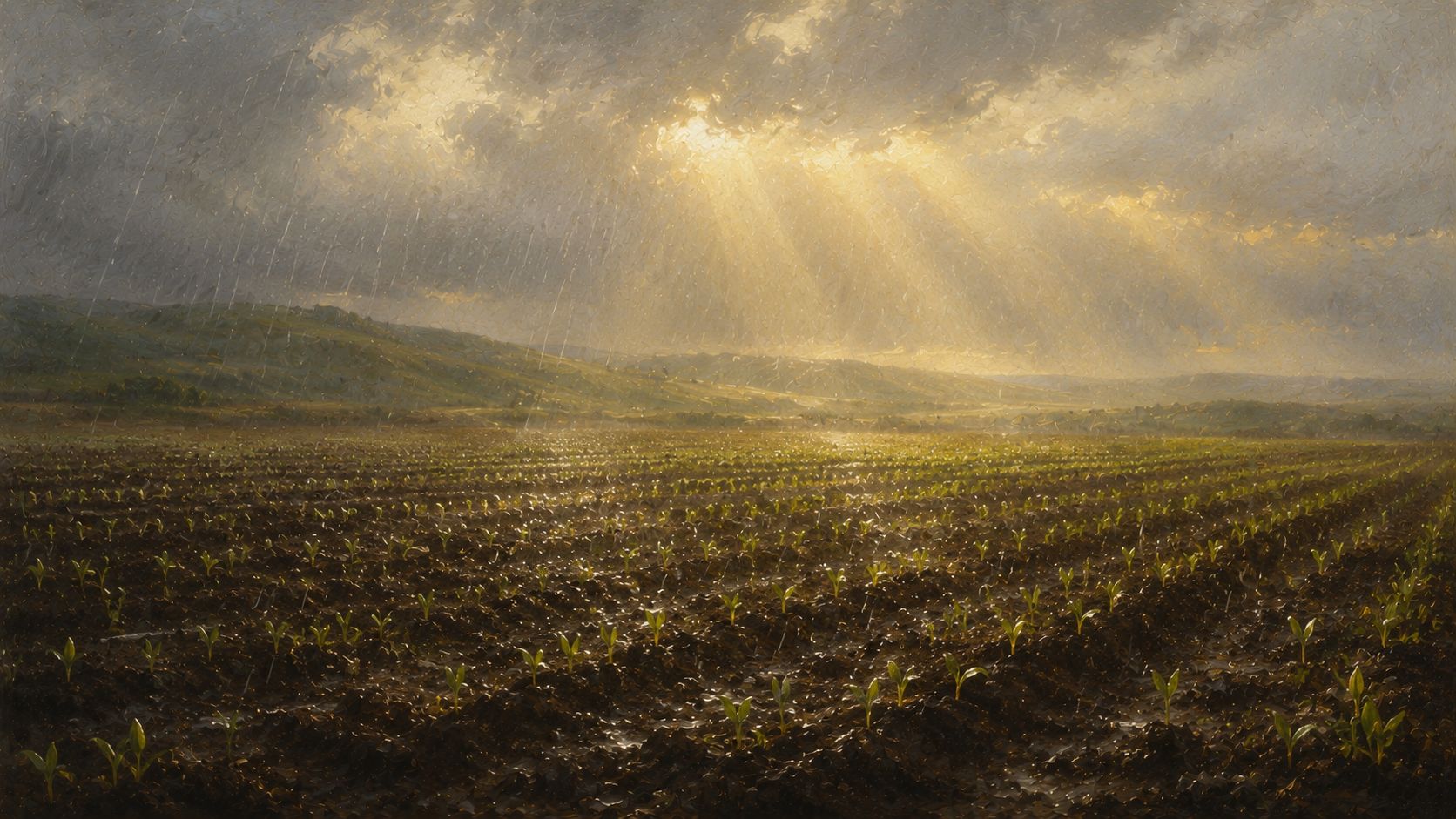
“For as the rain and the snow come down from heaven, and do not return there until they have watered the earth, making it bring forth and sprout… so shall my word be that goes out from my mouth; it shall not return to me empty.”Isaiah 55:10–11 (NRSV)
Notice who waters. The rain does not wait for the ground to deserve it. It comes down, and hard ground softens, and things sprout that no one standing in the field can take credit for. Paul, writing to Rome, names what that watering looks like from inside a life: “the Spirit of God dwells in you.” The root the shallow ground lacked was never going to be grown by effort; it is given, planted by the same God who raised Jesus from the dead — and there is therefore now no condemnation. The audit can end. No one is on trial for their soil.
What remains is the gardener’s modest, honest work: show up, water what can be watered, pull what can be reached, keep the ground open — and wait for spring like someone who has learned that spring does not depend on their worry. Because it does not. Branches that look dead in January bloom in April. Hearts that look finished are not finished. And when the harvest finally comes in — a hundredfold, sixty, thirty — no one will mistake it for wages. Yields like that are not produced. They are given, the way blossom is given to a bare branch — by a God who has kept every spring appointment he has ever made.

A Closing Prayer
God who gives the growth, forgive us for trying to farm ourselves — for the auditing, the striving, the fear of being the wrong kind of ground. You are the sower, the rain, and the spring; you soften what is packed hard, root what is shallow, and clear what chokes; and you have planted your own Spirit in us as the life we could never grow. Teach us the gardener’s small and faithful work, and then teach us the gardener’s rest — and in every winter of the soul, keep us near the bare branches until they bloom, for they will, because you are faithful.