
“Oil for the Long Night”
The Bridegroom Was Delayed
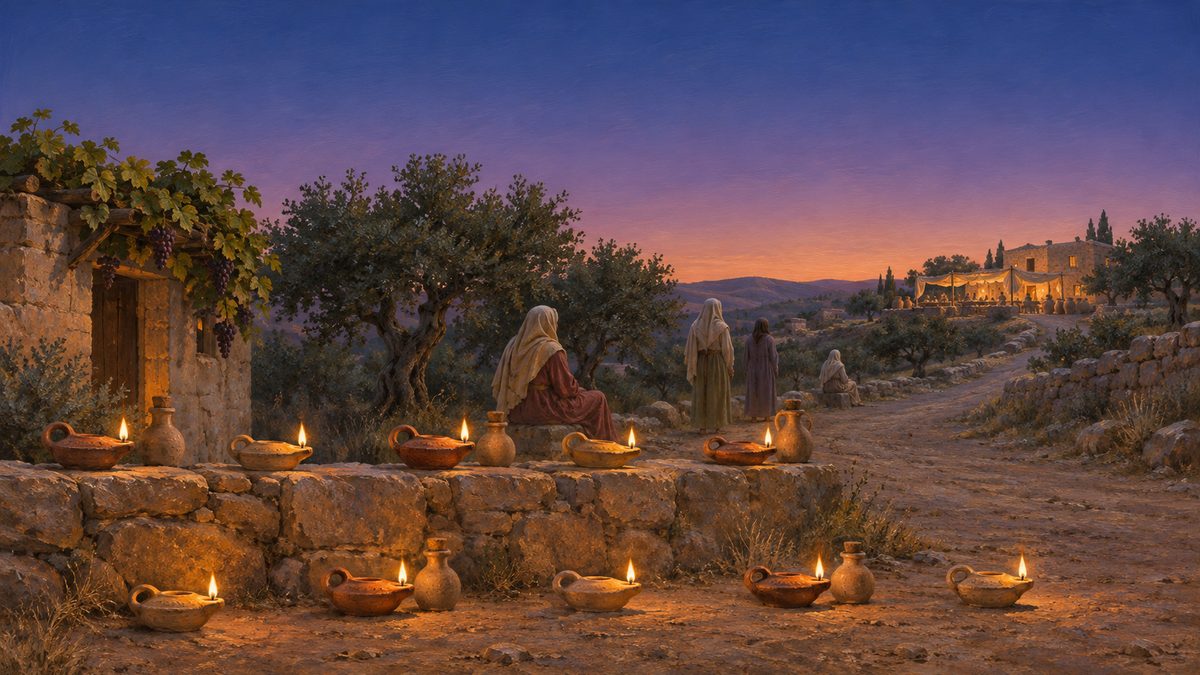
Everyone in this story falls asleep.
We remember five careful women keeping watch while five careless ones nod off. But that is not the story Jesus told. All ten became drowsy and slept. The wise slept too. Their wisdom was not that they never grew tired.
Jesus tells this on the Mount of Olives, days from his death. His disciples want to know when the end will come. He gives them no timetable. The bridegroom’s delay is not explained away. It is the condition in which faith must live.
So before this parable is a warning, it is a description of us: people who have waited long enough to grow tired. If that is you, you are in the middle of this story.
All of Them Slept
Paul writes to a grieving church in Thessalonica about those who have fallen asleep. They have not missed the Lord’s coming. Their hope rests in Jesus, who died and rose again. Paul does not forbid the grief. He gives it somewhere to stand.
And Psalm 70 gives weary people a prayer: O LORD, do not delay! The parable says the bridegroom delayed. The psalm tells God to hurry. The Bible has kept both. Faith can wait and still cry out.
So Keep awake cannot mean never sleep. Anyone who has kept watch beside a hospital bed and woken in the chair knows that exhaustion is not faithlessness. The distinction in this story is not between those who sleep and those who do not. It is between those prepared for the wait and those who are not.
What Cannot Be Borrowed
Look at how much the ten have in common. All came with lamps. All waited, slept, and woke at the shout. Our lamps are going out, the foolish say—not that their lamps were never lit. Outward resemblance is not readiness.
The only difference was a flask. The wise took flasks of oil with their lamps. The foolish had brought what an evening would need, and it was not an evening. It was a night.
The refusal to share is hard to hear. But the parable is not a command to withhold help. We can strengthen one another’s faith; a church must carry people who cannot carry themselves. Yet we cannot live one another’s response to Christ. Some preparation cannot be borrowed at the last minute.
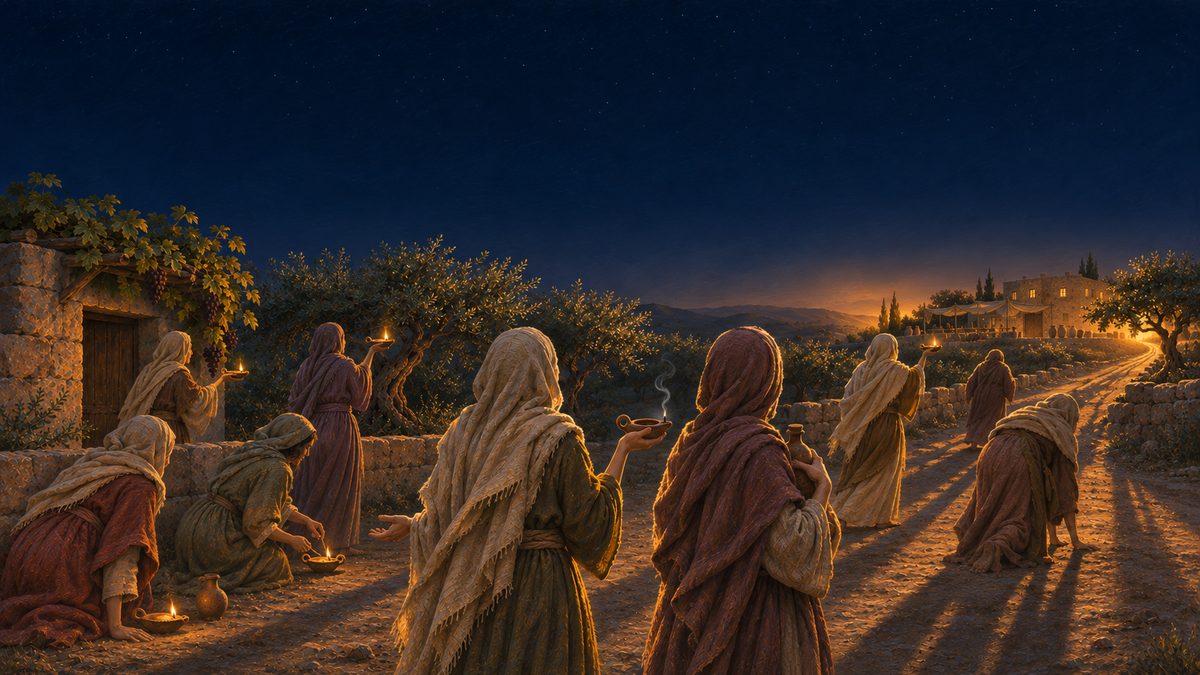
Jesus does not identify the oil for us. But elsewhere in Matthew, the wise person hears his words and acts on them. That gives us a way to hear this story: readiness is faith practiced, not merely professed.
Amos puts that practice in public terms. People eager for the day of the LORD offer festivals and songs, but God rejects worship severed from justice.
“Let justice roll down like waters, and righteousness like an everflowing stream.”Amos 5:24 (NRSV)
Not a passing surge of concern, but faithfulness that keeps flowing when enthusiasm runs dry.
In Methodist language, these are means of grace: prayer, Scripture, the Lord’s Table, works of mercy. Not payments for admission, but ways of receiving and responding to God’s gift. This week, choose one neglected act of faithfulness: make the visit, seek forgiveness, or stand beside a neighbor treated unjustly. None of it is dramatic. All of it burns.
The Door
While the foolish are away buying oil, the bridegroom comes. Those who are ready enter the feast, and the door was shut.
Later they come back. Lord, lord, open to us. And the answer is one of the hardest sentences in the Gospels:
“Truly I tell you, I do not know you.”Matthew 25:12 (NRSV)
We should not explain away that sentence. A life is not an endless rehearsal. Matthew has already warned that saying Lord, Lord is not the same as doing the Father’s will. Our response matters.
The warning addresses disciples, not outsiders we are free to condemn. It challenges the comfortable assumption that religious language is the same thing as readiness.
But Jesus also says, knock, and the door will be opened for you. If your flask feels empty, begin there. Ask for help now.
An empty flask is not a reason to hide from God. It is a reason to come.
The One Who Stayed Awake
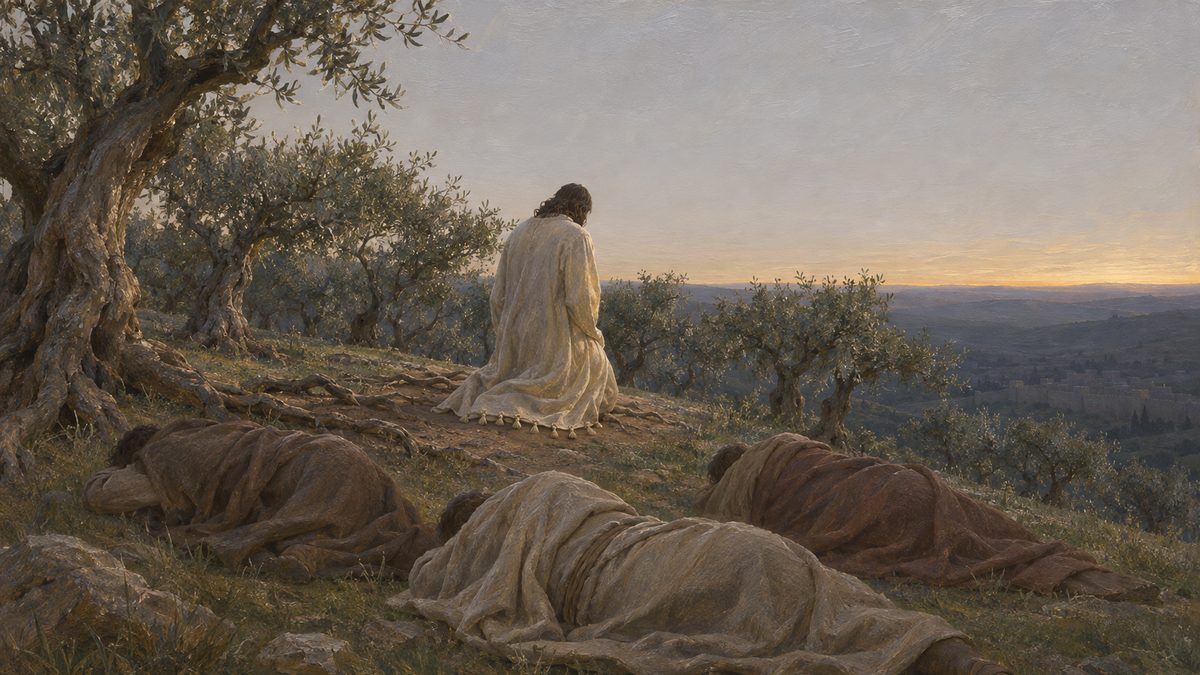
One chapter later, Jesus tells his disciples, Stay awake with me. In Gethsemane, they sleep again. This time they have failed his explicit request. The people who heard the warning are not heroes of unfailing vigilance. Neither are we.
But Jesus keeps watch and goes on to the cross. And after his resurrection, his message to those failed disciples is not rejection. It is go and tell my brothers. Their failure is real. So is the mercy that calls them back.
Matthew had already said this of him:
“He will not break a bruised reed or quench a smoldering wick.”Matthew 12:20 (NRSV)
That is the character of the one who holds the door.
Paul’s word to the grieving church is also a word for us:
“Therefore encourage one another with these words.”1 Thessalonians 4:18 (NRSV)
The coming Lord is our hope, not a timetable to master.
The night is long, and you will get tired. Sleep when you must; everyone in the story did. The one you are waiting for has already kept the watch you could not keep. You are seen. You are loved. And grace has not finished with you yet.
A Closing Prayer
Faithful God, you know how tired we are. Teach us to hear your word and do it. Let justice run in us like a stream that does not fail. Comfort those who grieve, and make us a people who encourage one another. Fill what is empty in us, and find us ready by the grace of Jesus Christ, who will not quench the smoldering wick and who is coming.
In the name of the Father, and of the Son, and of the Holy Spirit. Amen.