
“He Asked for Time”
The Oldest Song
The first song in the Bible is a revenge song.
Not a psalm. Four chapters into Genesis — before there is a temple, or a priest, or a single line of praise — a man named Lamech gathers his two wives and sings to them.
“I have killed a man for wounding me, a young man for striking me. If Cain is avenged sevenfold, truly Lamech seventy-sevenfold.”Genesis 4:23–24 (NRSV)
Seventy-seven. The first number Scripture attaches to how much a human being can take back. It is a boast, and it is arithmetic, and for a long stretch of the story it is the only number anyone has.
The Number That Ends the Counting
Two thousand years later a fisherman comes to Jesus trying to be generous. He has been in the room for the search party — the shepherd who leaves ninety-nine to go after one — and something in it has made him want to be big about this.
“Lord, if another member of the church sins against me, how often should I forgive? As many as seven times?” Jesus said to him, “Not seven times, but, I tell you, seventy-seven times.”Matthew 18:21–22 (NRSV)
The rabbis of that era had settled on three. Peter has more than doubled it, and he expects to be commended for it.
What he gets back is Lamech’s number. The very same phrase, in the Greek Bible those disciples read, lifted off a murderer’s lips and hung on the opposite thing. Where the world’s first song counted revenge, Jesus counts mercy — and he counts it in the killer’s own units.
Then the quiet part, the part that is easy to walk past. He did not raise the ceiling. He took the counter away. Anyone still keeping a tally toward seventy-seven has not understood the sentence.
And then he tells a story.
Ten Thousand Talents
A king settles accounts, and a servant is brought in owing ten thousand talents.
A talent was six thousand days’ wages. Ten thousand of them come to something near two hundred thousand years of labor. The number is not large; it is impossible. And it has been handed to a man who owns nothing.
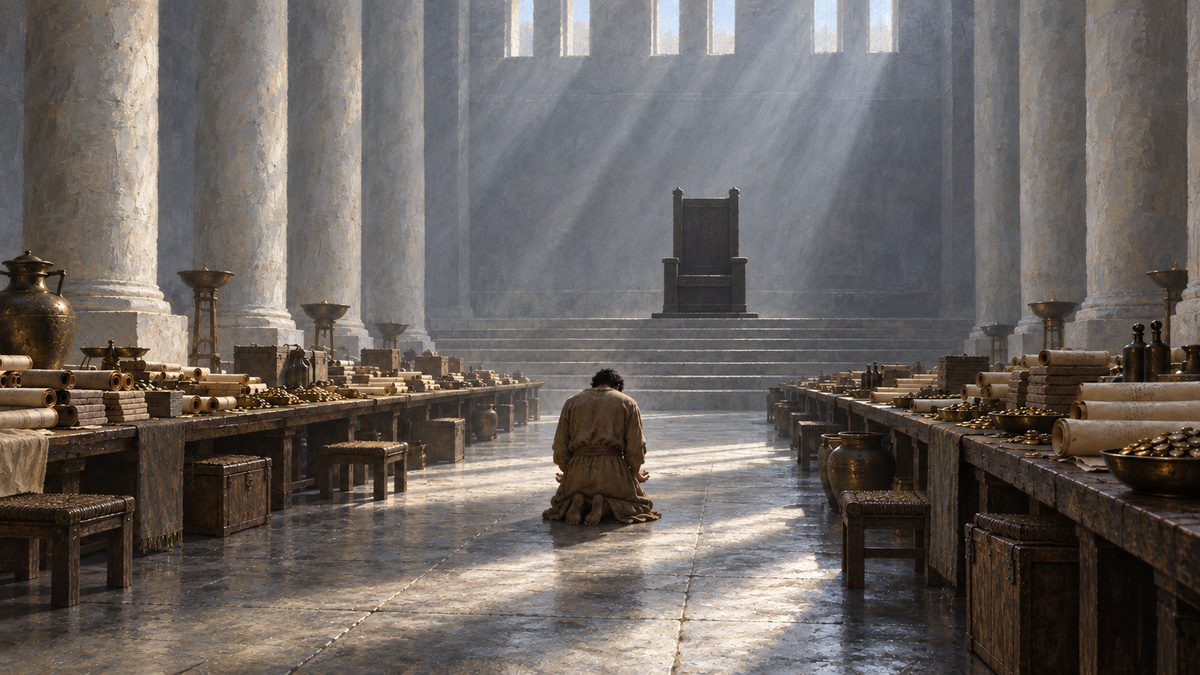
He falls on his knees.
“Have patience with me, and I will pay you everything.”Matthew 18:26 (NRSV)
Notice what he asks for. Not forgiveness. Time. He is still inside the arithmetic — still doing sums in his head, still believing that with enough Tuesdays he could work it off.
And the king, moved in his gut — Matthew’s word for it is a physical one — does not give him time. He cancels the debt and lets him go. The man asked for an extension and walked out with the estate.
His Own Prayer, in Another Man’s Mouth
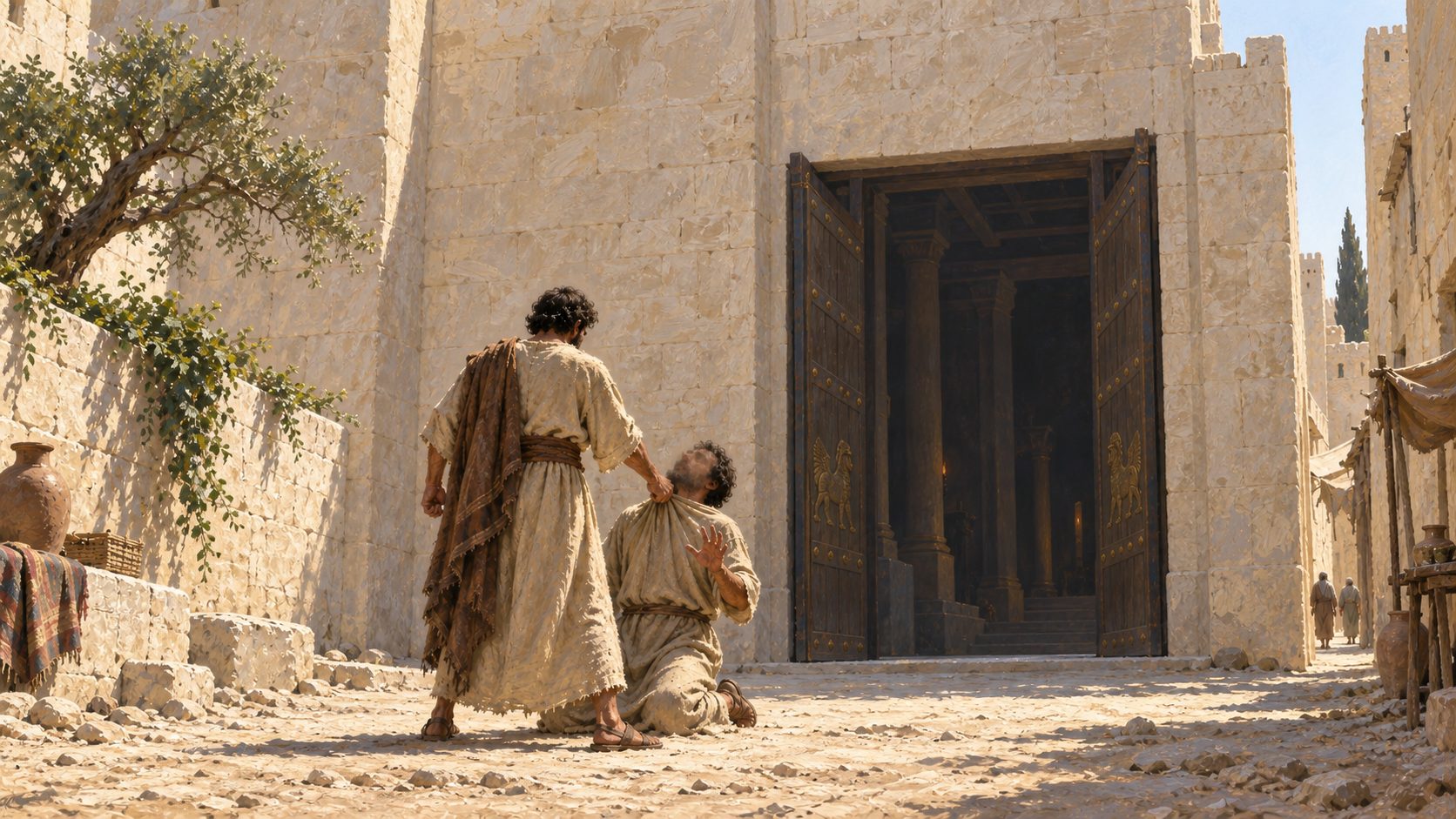
He is barely out the door when he finds a man who owes him a hundred denarii.
That is not nothing. A hundred days’ wages is a real debt between real people, and it is genuinely owed. It is also about one six-hundred-thousandth of what was torn up an hour ago.
He takes him by the throat. And the second man goes down and says:
“Have patience with me, and I will pay you.”Matthew 18:29 (NRSV)
The same words. His own prayer, out of another man’s mouth — and he does not recognize it. He has the man thrown into prison until the debt is paid, which is another way of saying forever.
Why would a man not know his own sentence when he hears it? Because he never stopped saying it.
The king said forgiven. The man heard extended. And someone who believes he is still paying will collect from everyone he meets. John Wesley said it without decoration: forgiving others is not the price of being forgiven. It is the evidence that forgiveness has arrived.
The Ending Nobody Wants
The king hands him over to the torturers, and Jesus says that his heavenly Father will do the same to anyone who will not forgive from the heart.
That is the hardest verse in the chapter, and it has been read badly for a long time. It is not a description of a chamber God keeps in the basement. It is a description of a cell a man builds himself and then hires the jailer for. Someone who will not put a debt down is already living in it; the door has been unlocked the whole time.
And one thing has to be said plainly, because this passage has been turned against exactly the wrong people. Forgiving is not going back. It is not trusting again. It is not pretending the thing did not matter. It is not a feeling anyone can produce on command. It is laying down the claim to collect — and nothing else is being asked. Six verses earlier this same chapter says it would be better to have a millstone hung around your neck than to harm one of these little ones. This text will not be used against anyone who has been hurt.
Am I in the Place of God?
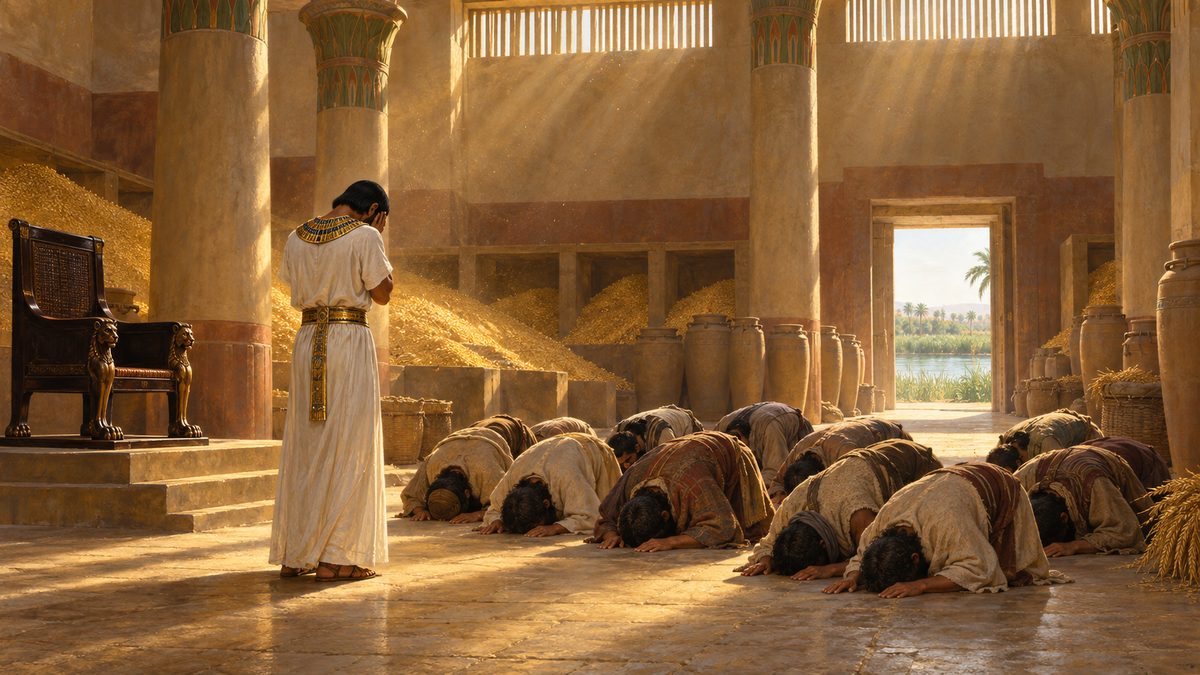
Where the strength for that comes from sits at the other end of Genesis. Seventeen years after the pit.
Jacob is dead. The brothers do the arithmetic of frightened men and decide that the only thing standing between them and revenge has just been buried. So they send a message ahead: your father gave this instruction before he died — forgive your brothers.
There is no record anywhere that Jacob said it. Seventeen years of eating Joseph’s bread, and they are still borrowing a dead man’s mouth.
And Joseph weeps. Not at the memory of the pit — at being feared by his own brothers. Then he says the sentence the whole story has been walking toward.
“Do not be afraid! Am I in the place of God? Even though you intended to do harm to me, God intended it for good.”Genesis 50:19–20 (NRSV)
He does not say the crime was small. He does not say it did not happen. He says the bench is not his. What was intended for harm and what was intended for good are two different verdicts, and only one of them was ever his to hand down. Paul says the same thing to the Romans in a single line, and it is the most freeing sentence in the letter: the seat is occupied. You may get down.
I preached this on the last Sunday before eight weeks away, and I said it out loud to a congregation I love: do not carry anything unforgiven through a season that long. The cell has your name on the lease, and the rent is your own life, and someone has already paid what could never be paid.
So here is the question to carry out — small enough to ask on an ordinary Tuesday, about whoever it is you have by the throat.
Am I in the place of God?
He asked for time. He was given a life. You are seen, you are loved, and grace has not finished with you yet.
A Closing Prayer
Lord Jesus Christ, we came in still asking for time, and you handed us the whole estate. Forgive us for walking out still paying. Where we have someone by the throat, open our hands. Where we have been hurt, guard us. Teach us that the bench is not ours. Keep this congregation gentle with one another, quick to release, slow to count. You took the oldest song in the world and made it a song of mercy. Sing it in us.
In the name of the Father, and of the Son, and of the Holy Spirit. Amen.