
“What Fear Buries”
A Long Time
Eight weeks is a long time.
I have been away from this pulpit since the middle of September, and before anything else I want to say thank you. You kept the doors open and the prayers going. You welcomed the preachers who came. You looked after one another. I have come home to a church that was faithful while I was gone.
That brings us to today’s story. Not because I am the returning master. I am not. I am one of the servants, and so are you. The church belongs to Christ, and he has given us work to do together.
“For it is as if a man, going on a journey, summoned his slaves and entrusted his property to them; to one he gave five talents, to another two, to another one, to each according to his ability. Then he went away.”Matthew 25:14–15 (NRSV)
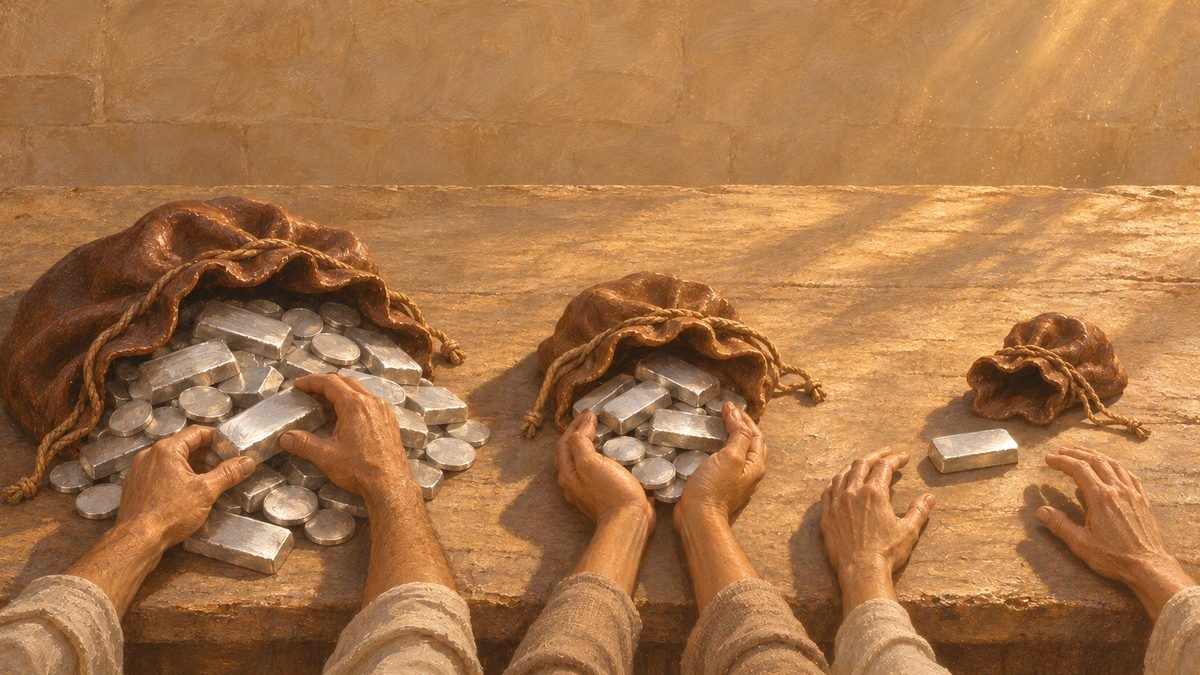
Jesus tells this story to disciples who want to know when the end will come. He has told them that no one knows. Now he tells them how to live with the not knowing.
What Was Handed Over
Start with the word, because the word has drifted.
A talent was not a skill. It was money—a weight of precious metal representing a fortune. Even the man with one talent received something substantial. The gifts differ; the call to faithfulness does not.
The first two put what they received to work. When the master returns, both hear the same words: “Well done, good and trustworthy slave.” And both receive the same invitation: “Enter into the joy of your master.” The man who made two hears every syllable the man who made five hears.
The question is not whether you have what somebody else has. It is what you will do with what has been entrusted to you. Faithfulness is not a guarantee of impressive results. It is a willingness to put what we have received at the service of love.
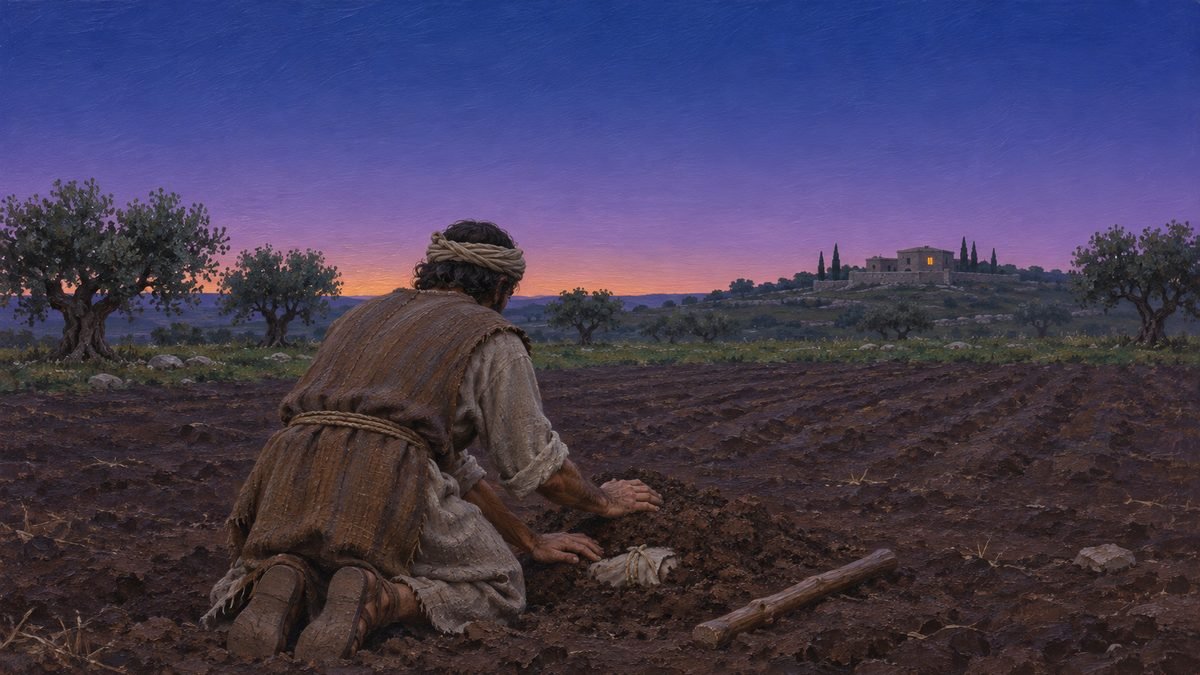
The third man dug a hole.
Be fair to him. He wanted to keep the money safe. When the master returned, he could hand it back intact: “Here you have what is yours.”
He returned every coin. But he never put it to work. This is not a servant who tried and failed. This is a servant who would not begin.
In his hands, it could have served a future. In the ground, it served no one.
I Was Afraid
Why? He tells us: “Master, I knew that you were a harsh man.” Then comes the admission: “I was afraid.”
Fear. You and I share that feeling with this servant.
He had a picture of the man who had trusted him: hard, grasping, reaping where he did not sow. You protect yourself from someone like that. You keep his money safe, hand it back, and step away.
But his fear was not the whole story. Before he had produced anything, he had already been trusted with a fortune. Fear kept him from seeing it.
Zephaniah warns against another picture: a God who does neither good nor harm. Harsh or indifferent, either picture can become a reason to do nothing.
Here is what I most want to say: the God you think you have shapes the life you dare to live. Theology is not a hobby. It is the picture in your heart of the one who gave you everything.
And some of us learned fear honestly. Christ does not shame us for trembling; he meets us there. Reverence takes God seriously. But terror that makes us hide from God is not the trust Jesus invites us into. For some, the first step out of that fear may be asking for help, or letting someone sit beside you. Courage need not be dramatic.
The master answers him: If you really believed I was that harsh, why not at least take the money to the bankers? Even by his own account, burying it makes no sense.
And look at what his fear got him. He was afraid of losing what he had, and afraid of being judged by the master. So he tried hard to protect the money and his reputation. And his fear brought him exactly what he feared: he lost what was entrusted to him, and he was judged.
So here is a question for us, Trinity. What are we afraid of? What is our fear telling us to work harder to protect? And has it worked?
Who Was Actually Asking
So who was actually asking?
Who is the master this servant was so afraid of? The one telling this story is Jesus. And its ending is hard: the servant is thrown into outer darkness, where there is weeping and gnashing of teeth. I will not pretend that sounds gentle. What we do with what we receive matters.
But we must hear that warning alongside Paul’s promise today: God has destined us “not for wrath but for obtaining salvation through our Lord Jesus Christ, who died for us.” The one who comes to judge is the one who died for you. Judgment is serious; grace is not an afterthought.
Listen again to the invitation: “Enter into the joy of your master.” Not merely an account balanced. A shared joy.
The psalm gives us a prayer for that life: “Teach us to count our days that we may gain a wise heart.” Our time is finite. It is also a gift.
Enter into the Joy
One more buried thing in this Gospel.
Jesus himself will be laid in a tomb. But the earth will not keep him. The Father raises him. And because he lives, fear need not have the last word in us.
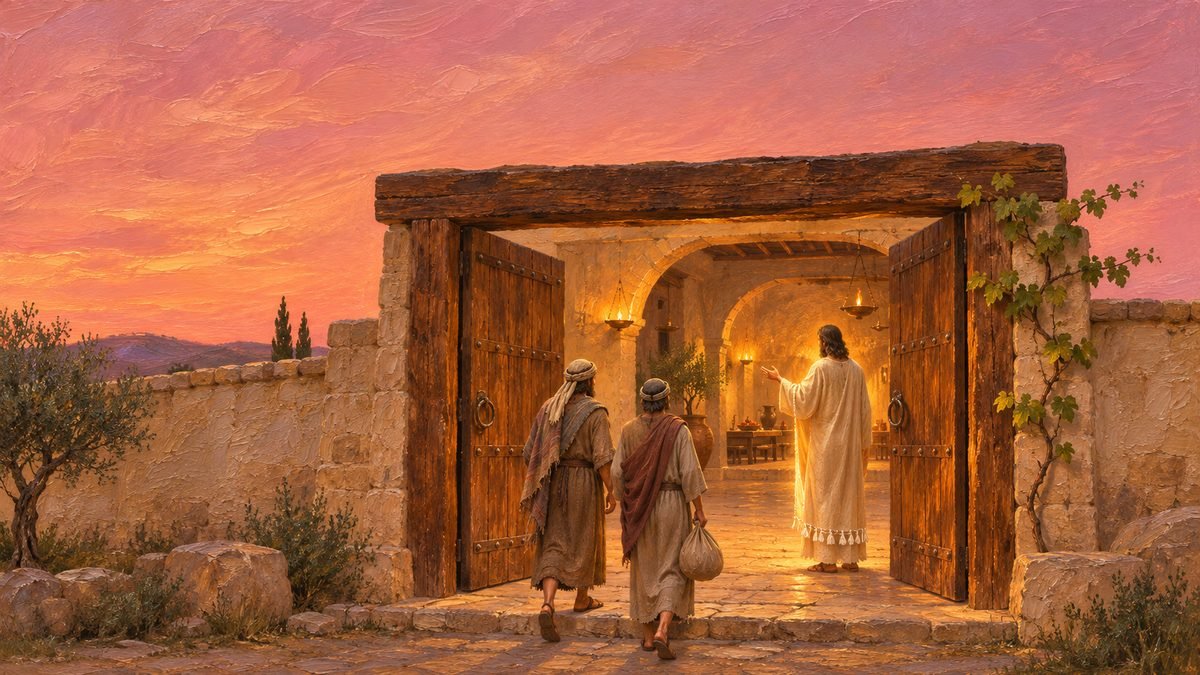
So what have you kept in the ground because you were afraid—a kindness, an offer of help, a gift you thought too small? This week, choose one small act of faithfulness. Make the call. Offer the help. Begin before you feel completely ready. Not to earn God’s love, but because you have already been loved. You were trusted before anything was asked of you.
Fear is not the word meant to drive us. Love is. Fear keeps us from doing what our master commands. Love enables us to do it. Fear. Love. Both are four-letter words. Which one will you take home today?
You are seen. You are loved. And grace has not finished with you yet.
A Closing Prayer
Gracious God, thank you for trusting us with gifts before we knew how to use them. Meet us in our fear. Correct the pictures of you that keep us hiding, and show us your face in Jesus Christ. Give us courage for one faithful step. Bless this church and the care it has shared. Bring us into your joy.
In the name of the Father, and of the Son, and of the Holy Spirit. Amen.