
“You Have One Teacher”
The Questions Are Over
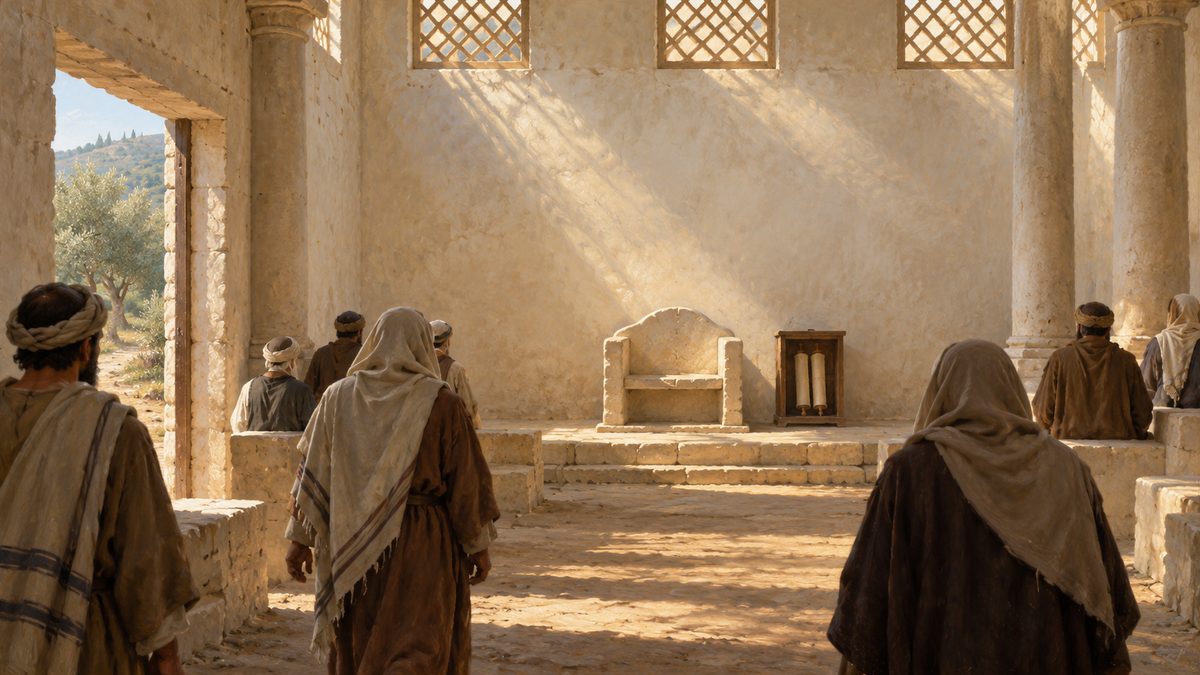
The questions are over.
For a whole day in the temple courts, one group after another had tried to catch Jesus in his words. It ended with his own question, which no one could answer.
Then Jesus turns around. He stops talking to the men who were testing him and speaks to the crowds and to his disciples. Two audiences: the people who sit under religious leaders, and the people who will soon be religious leaders themselves. This paragraph was written down for a church, and a church is reading it still.
“The scribes and the Pharisees sit on Moses’ seat; therefore, do whatever they teach you and follow it; but do not do as they do, for they do not practice what they teach.”Matthew 23:2–3 (NRSV)
The Seat and the Gap
It is a strange thing to hear Jesus say. Do whatever they teach you.
The seat is Moses’ seat; what is read from it is God’s law, and its authority does not rise or fall with the man who reads it. The trouble is not the seat.
A teacher’s failure does not cancel the word he teaches. Many people have been wounded by a preacher and have wondered afterward whether everything they heard from him was a lie. Jesus says no. The word was true even when the mouth that spoke it was not.
But the gap is real too. They do not practice what they teach. In Greek it is five words: they say, and do not do.
None of this was new in Israel. Seven centuries earlier the prophet Micah said it about Jerusalem’s leaders, whose priests teach for a price, yet lean upon the LORD and say, “Surely the LORD is with us!” Confident religion, with nothing underneath it. Jesus stands in Micah’s line, Israel’s prophet speaking to Israel’s teachers. And before the paragraph is over, it will be speaking to the church.
Heavy Burdens, Long Fringes
Two things open the gap between saying and doing.
The first is the burden. They tie up heavy burdens, hard to bear, and lay them on the shoulders of others; but they themselves are unwilling to lift a finger to move them. The charge is not that they cannot lift the load. It is that they will not.
Matthew wants us to remember an earlier sentence. Come to me, all you that are weary and are carrying heavy burdens, and I will give you rest … For my yoke is easy, and my burden is light. Same words: heavy burdens. Some teachers bind them on. One Teacher takes them off. That is one test of any teaching: does it lay the load on you and walk away, or does it come alongside and lift?
The second is the audience. They do all their deeds to be seen by others; for they make their phylacteries broad and their fringes long.
To be seen by others. Matthew used the same phrase once before, in the Sermon on the Mount: Beware of practicing your piety before others in order to be seen by them.
The phylacteries were small boxes holding passages of Scripture, the Shema among them, Hear, O Israel, bound on the arm and the forehead. The fringes were the tassels God told Israel to wear on the corners of their garments, so that you remember all the commandments of the LORD and do them. Remember and do.
Jesus wore them. A woman who had been bleeding for twelve years came up behind him in a crowd and touched the fringe of his cloak, and was healed.
So the trouble is not the fringe. It is making it long. A tassel meant to help its wearer remember and do has been lengthened so that others will see. The same piety that once healed a woman in a crowd has become a costume.
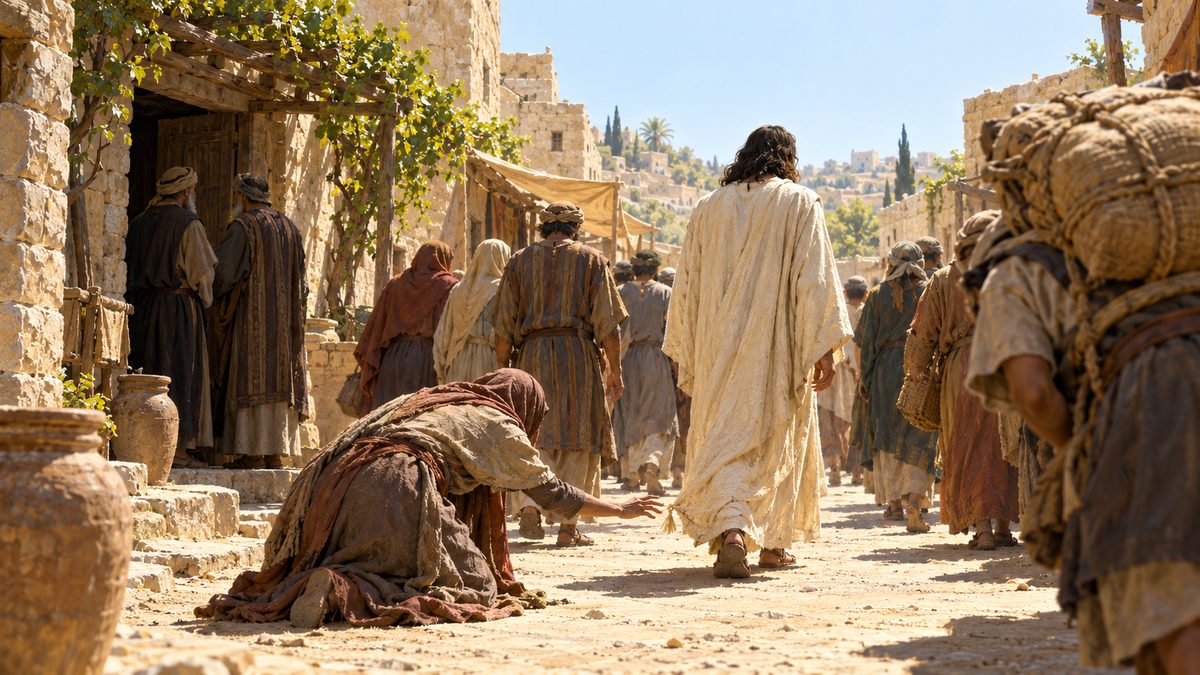
And what do these teachers love? The place of honor at banquets and the best seats in the synagogues, and to be greeted with respect in the marketplaces, and to have people call them rabbi. Last Sunday the commandment was love of God and neighbor. Here is a love that faces the mirror.
But You
Then the paragraph turns, on two words: But you. And the first thing Jesus says to the church is a rule about titles.
“But you are not to be called rabbi, for you have one teacher, and you are all students. And call no one your father on earth, for you have one Father—the one in heaven. Nor are you to be called instructors, for you have one instructor, the Messiah.”Matthew 23:8–10 (NRSV)
Three titles refused, three reasons given, and every reason is the same: one. One Teacher. One Father. One Instructor. It is the word from the Shema, the word inside those phylacteries: the LORD is one. Israel has one God. The church has one Teacher.
The NRSV reads you are all students. Matthew’s Greek says you are all brothers and sisters. Both are true. Under one Teacher, everyone is still learning. Under one Father, everyone is family. There is no rank in that room. There is a classroom, and there is a table.
Last Sunday Jesus asked, What do you think of the Messiah? and no one could answer him. Here is his answer, given not to his opponents but to his friends: you have one instructor, the Messiah. There are many voices instructing us, on every screen and platform, and most of them want to be seen. The church has one Teacher; every other teacher is a fellow student, at best a sibling a little further along the road.
That is a hard word for anyone who wears a title, and I answer to “Pastor” every week. The text does not object to the word on the office door; Paul calls himself a father in the very reading set beside this one. What the text asks is whether the title is sought, loved, worn wide. Every title in the church is borrowed from the one Teacher, and we hold it on loan.
Paul shows what that looks like. You remember our labor and toil, brothers and sisters; we worked night and day, so that we might not burden any of you while we proclaimed to you the gospel of God. His word for burden comes from the same root as Jesus’ word heavy. He made tents by lamplight so as not to be one more load on the people he loved. He did not lengthen his fringes. He shortened his sleep.
For anyone who has been badly led, the psalm for this day is a prayer: O send out your light and your truth; let them lead me. Not the leaders who failed. God’s own light and truth.
The Greatest
The paragraph ends with two sentences that echo what Jesus has already told his disciples:
“The greatest among you will be your servant. All who exalt themselves will be humbled, and all who humble themselves will be exalted.”Matthew 23:11–12 (NRSV)
Notice who does the humbling and the exalting. Not us. The verbs are God’s. This is not an instruction to people who have been pushed down all their lives to keep their heads lower. To them it is a promise: will be exalted. It is a warning only to those who love the first seat.
And it is a description of Jesus. He had already told the disciples that the Son of Man came not to be served but to serve, and to give his life a ransom for many. Within days he would take bread at a table and give it away, kneel with a towel, and go to a cross. Paul would later put it in the same two verbs: he humbled himself and became obedient to the point of death—even death on a cross. Therefore God also highly exalted him.
The one Teacher did not teach a humility he would not practice. He did not tie up a burden he would not lift. He lifted the heaviest one there is, and carried it the whole way.
That is why we have only one Teacher. The teachers on Moses’ seat said, and did not do. He said, and did.
You do not have to lengthen anything to be seen. You are seen. You are loved. And grace has not finished with you yet.
A Closing Prayer
Gracious God, you are our one Father, and your Son is our one Teacher. Forgive us when we say and do not do, when we lay burdens on others that we will not touch, and when we love to be seen more than we love you. Make us students together and brothers and sisters at one table, and teach those who lead your church to serve and not to be served, to carry loads and not to bind them. Send out your light and your truth, and let them lead us, until we are like Jesus Christ, who humbled himself for us and whom you have highly exalted, our Teacher and our Lord.
In the name of the Father, and of the Son, and of the Holy Spirit. Amen.