
“A Cup of Cold Water”
The Least Word
For two chapters Jesus has spoken of enormous things — harvests and laborers, authority over disease and death, wolves and councils and floggings, a sword that divides a household, a cross to be carried, a life to be lost in order to be found. And then the towering discourse comes to rest on the smallest thing imaginable: a cup of cold water.
“And whoever gives even a cup of cold water to one of these little ones in the name of a disciple — truly I tell you, none of these will lose their reward.”Matthew 10:42 (NRSV)
That is the closing note — not a trumpet but a drink of water handed to a nobody on a hot day. After all the talk of crosses and kingdoms, the final word is the least word, and that, it turns out, is the point.
The Chain That Reaches All the Way Up
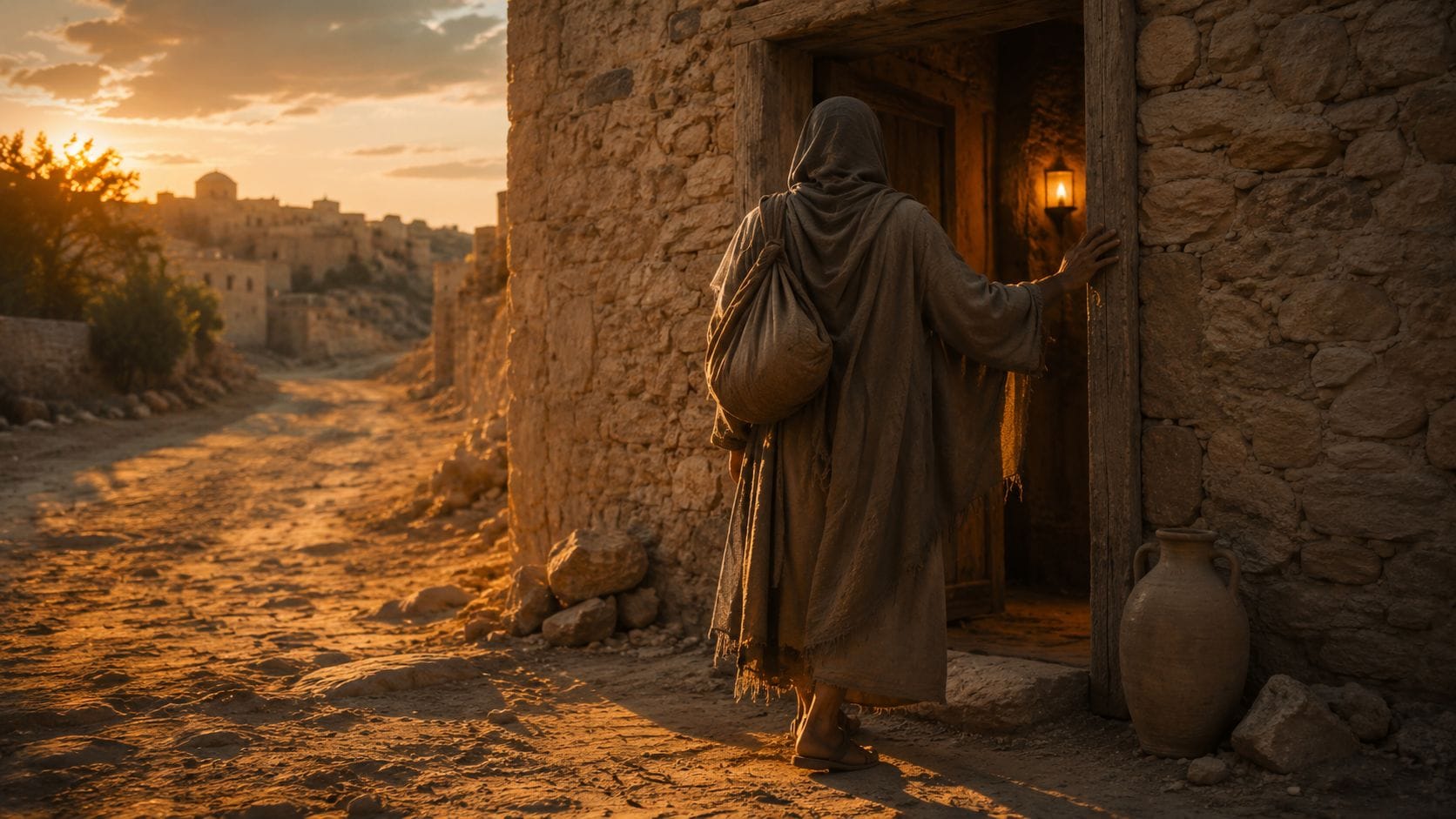
The verse just before the cup is one of the most staggering things Jesus ever said, and it is easy to read past because it sounds modest.
“Whoever welcomes you welcomes me, and whoever welcomes me welcomes the one who sent me.”Matthew 10:40 (NRSV)
Follow the chain. To welcome a disciple is to welcome Jesus; to welcome Jesus is to welcome the Father who sent him. Three links, and the bottom one is an ordinary, tired traveler knocking at a door, while the top one is the Lord of heaven and earth. Jesus is drawing on a principle his hearers knew well: in that world an envoy carried the full authority of the one who sent him — to receive a king’s messenger was to receive the king, to insult the messenger was to insult the throne. A person’s representative, the rabbis said, is as the person himself. Jesus takes that legal commonplace and pours the glory of God into it. The unimpressive, empty-handed disciple at the door carries Christ, and Christ carries the Father. Heaven arrives disguised as someone who needs a place to stay.
It is the same logic Jesus will press near the end of this Gospel, when the King tells the righteous that they fed and welcomed and clothed him without ever knowing it: just as you did it to one of the least of these… you did it to me (Matthew 25:40). Christ has hidden himself among the people most easily overlooked. The welcome extended to the least of them travels all the way up — and so does the cold shoulder. No one is ever only dealing with the person in front of them; they are always also dealing with the One who stands behind them.
A Cup of Cold Water

Then comes what he actually asks for. Not a banquet, not a fortune — a cup of cold water. In a dry country under a hard sun, cold water is mercy a person can hold in one hand. It requires no wealth, no talent, no training, no title; anyone with a well and a willingness can give it. That is exactly why Jesus chooses it. He reaches for the most negligible kindness he can name, the thing a child could do, and says that even this will not be forgotten in heaven.
It is a deep human assumption that what counts with God must be large — the missionary who crosses an ocean, the donor who funds the building, the saint who does something heroic — and that the ordinary kindnesses of ordinary people are too small to register. The meal left on a grieving doorstep, the ride to the doctor, the chair pulled out for a stranger, the note no one required: such things get done and dismissed as nothing. Jesus leans across the centuries to say that they were not nothing. None of them will lose their reward. Not one cup of cold water has ever evaporated unseen. God keeps a different ledger, and in his accounting the small mercy done in love outweighs the grand gesture performed for show.
Jesus presses the point one more way before he reaches the cup. Whoever welcomes a prophet in the name of a prophet will receive a prophet’s reward, and whoever welcomes a righteous person in the name of a righteous person will receive the reward of the righteous (Matthew 10:41). The one who cannot prophesy can still shelter a prophet; the one who is no hero can still take in a righteous traveler — and somehow comes to share in the very reward of the gift received. Heaven has arranged a way for the ordinary host to be folded into the errand of the people they welcome. No one is shut out of the reward for lack of greatness; the door in is hospitality, and it stands open to anyone.
The Little Ones
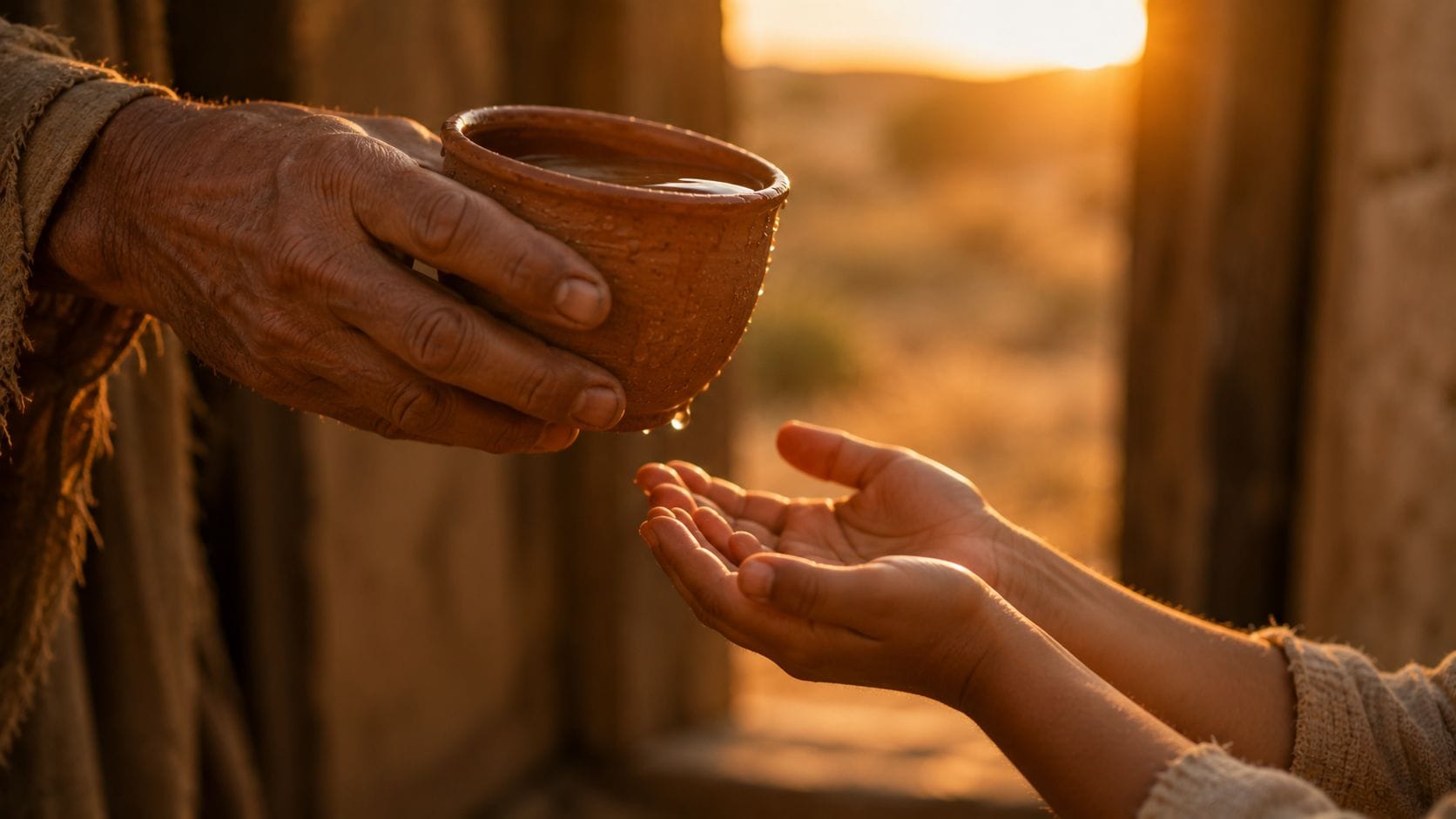
Notice, finally, who receives the water: one of these little ones. The Greek mikroi means the little, the least, the unremarkable — the same people the world steps over. Two things are dignified at once. The small deed is dignified, for a cup of water counts; and the small person is dignified, for the little one is worth the water. Jesus lifts both the act and the person from the bottom of the pile and sets them at the center of his kingdom. The God of the universe has arranged things so that he is met, served, and loved in precisely the places dismissed as minor: in little kindnesses, done to little people, by people who think of themselves as little too.
There are, in the end, no insignificant people in the kingdom of God and no insignificant mercies, for the Lord who counts the sparrows counts the cups of water as well. The ministry of a church was never mainly the work of one figure at the front; it is, and always has been, a thousand cups of cold water passed from hand to hand — the welcome at the door, the meal carried to the sick, the name remembered, the lonely one drawn into the circle. None of it requires a robe or a title, and none of it is lost.
A Closing Prayer
Lord Jesus, you came to us disguised as one who needed welcome, and you taught us that to receive the least is to receive you, and to receive you is to receive the Father. Forgive us for despising small things and small people — for waiting to do something great while the cup of cold water sat untouched at our feet. Open our eyes to the little ones at our door and our hands to the ordinary mercies we are able to give today, and build your kingdom among us out of ten thousand small kindnesses, that none of them be lost. In your economy, nothing given in love ever is.