
“The Room and the Road”
Do Not Let Your Hearts Be Troubled
The first words Jesus speaks on the last night of his life are not a teaching but a refusal of panic. “Do not let your hearts be troubled.” Judas has just walked out into the night. Peter has just been told he will deny his Lord before the rooster crows. The temperature in the upper room has fallen.
It is into that cold air that John records one of the gentlest sentences in the Gospels — “In my Father’s house there are many rooms. I go to prepare a place for you, so that where I am, there you may be also.” The promise comes in a room where one disciple has already broken faith and another is about to. It is a sentence of room — room for the betrayer who has not yet betrayed, room for the denier about to deny, room for the doubter sitting two seats over and the disciple whose faith is barely a flicker. The Father’s house is large enough to hold every disciple in that upper room — and every disciple in any sanctuary since — because Christ is large enough to hold them. The place that is being prepared is not, in the end, a coordinate on a map. The place is wherever Jesus is.
The Way Has a Face
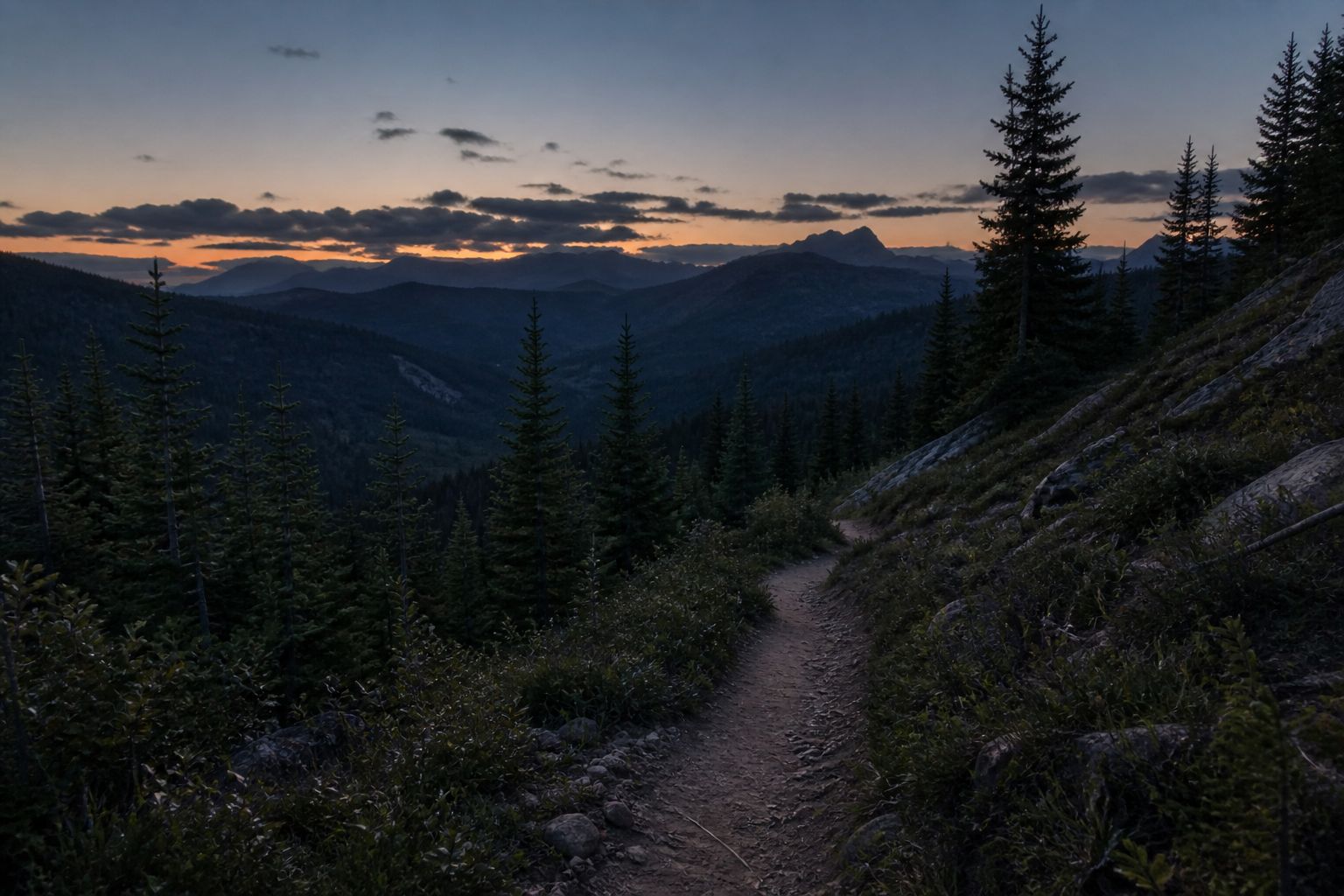
There is a familiar scene in Cheryl Strayed’s memoir Wild. After her mother has died, her marriage has ended, and the bottom of her life has fallen out, she straps on an oversized pack she can barely lift and starts walking the Pacific Crest Trail. Eleven hundred miles, mostly alone. She has no business being on the trail. She loses one of her boots over the edge of a mountain at one point and walks anyway. What she went out to find at the Bridge of the Gods turns out, mile by mile, to have been waiting for her on the trail itself.
It is one of the truest secular pictures of what Christian life actually is. The word Christian names, by definition, those who follow Christ — not those who hold a worldview, but those walking after a person. And the person they are walking after has named himself the way.
Thomas, in the upper room, is the disciple who refuses to let the metaphor stay metaphorical. “Lord, we do not know where you are going. How can we know the way?” Every map ever drawn asks the same question. Where, before how. The answer Jesus gives collapses both into a single word — himself.
“I am the way, and the truth, and the life. No one comes to the Father except through me.” John 14:6
The Greek word for “way” here is hodos — a road, a route, a journey already underway. Of the three nouns Jesus claims for himself in this verse, it is the only one that is also a category of motion. A way is for walking. The way Christ is is not the way Christ shows; it is the way Christ walks, and on which he asks his disciples to walk after him. There is no road to be handed across the table, Thomas. No doctrine. No pamphlet. No map. The road is the rabbi who, half an hour ago, knelt and washed your feet.
A Gift, Not a Pass-Card
Few verses in the New Testament have been more quoted, and few more misused, than John 14:6. It has been weaponized — pulled out as a kind of velvet rope around a club whose membership cards are all in order. But the Lord who first said it never used it that way. He used it as a gift.
The exclusivity of John 14:6 is not the exclusivity of a club. It is the exclusivity of love — this love, in this body, on this cross. The way home is exclusive because it is this Galilean, and because the road bears his nail-marks. The verse is spoken inside a meal, between a teacher and his confused friends, on the night the teacher will be arrested for the people he is comforting. It cannot be lifted out of that table and made to serve as a bouncer’s ledger without doing violence to the place it came from.
The earliest church understood this in their bones. At first they did not call themselves Christians at all — that name was given to them later, in Antioch, almost as an insult. What they called themselves, six different times in the book of Acts, was simply the Way (hē hodos). They named themselves after a road. They knew they were not standing still on a creed; they were walking after a person.
A Trail That Does Not Check the Luggage
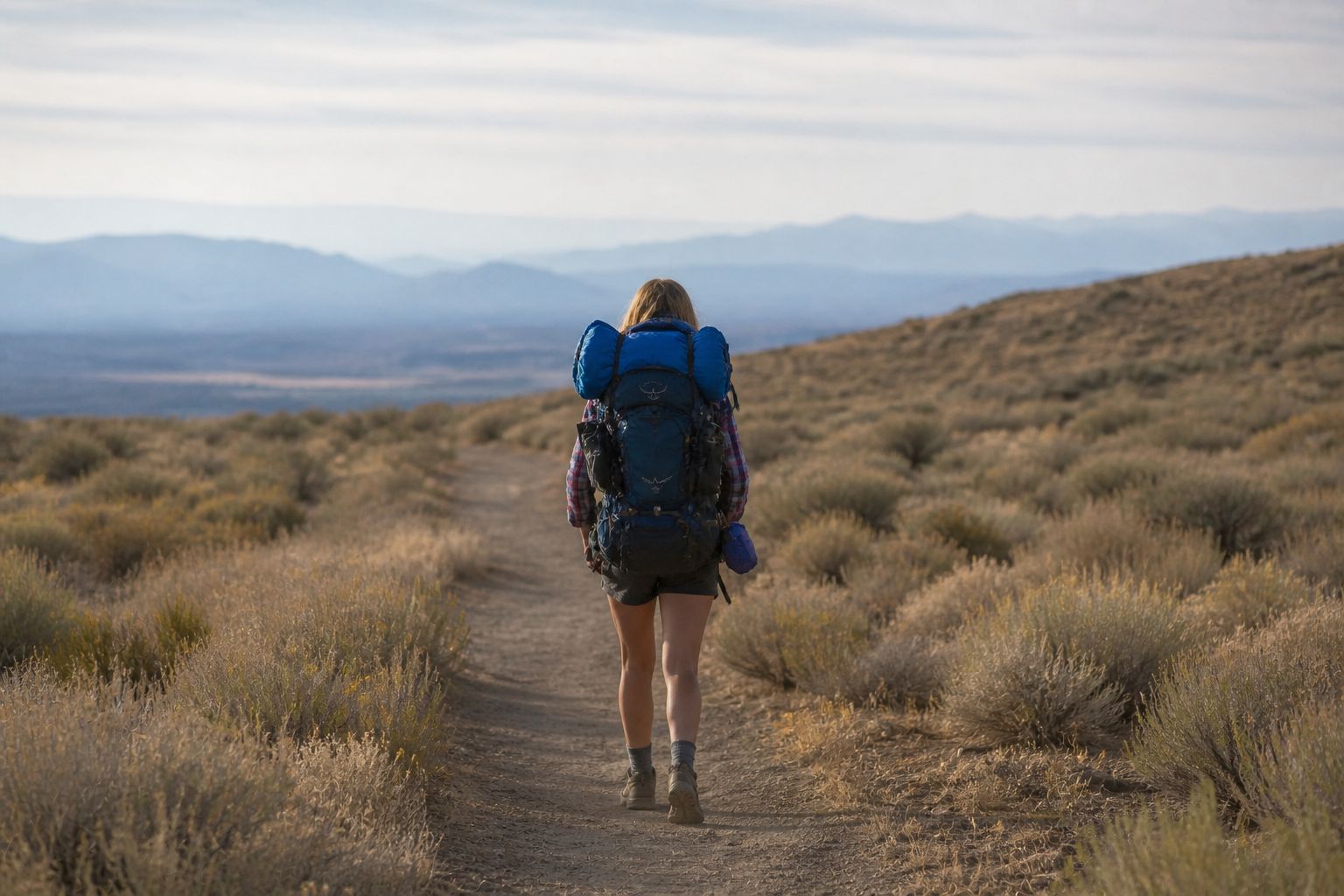
Once the way is recognized as a person, the journey on it changes shape. There is no King’s Highway here, no royal shortcut for the favored, no separate paved road for the well-credentialed. Whatever prejudice has been carried onto this road — the categories, the hierarchies, the maps of who is in and who is out — begins to dissolve as the miles unfold. It is hard to look down on a fellow traveler when both are bent over the same blister.
And the gatekeeping is not entrusted to the travelers. None of those on the trail are given the keys. They are all there, together, simply to be on the road. The trail, in this respect, is a quiet rebuke to every tradition that has confused itself with the customs office. Jesus is the way; he is also therefore the only one with the standing to declare it.
That does not mean the journey is taken in silence. Anyone the road brings near becomes, by the simple fact of shared direction, a brother or sister on the same journey. Travelers encourage one another. They listen across the campfire. They root for each other when the next pass looks impossible. The eyes are on the rabbi walking ahead, but the company along the way is already grace.
The Pack Gets Lighter

Every long-distance walker eventually discovers something the trail teaches and the living room cannot. The pack gets lighter. Not only because the shoulders are getting used to it, but because the road, mile by mile, makes the distinction between need and luggage. Most of what was strapped on at the trailhead turns out, by the third day, to be exactly that — luggage.
Strayed, in her account of the Pacific Crest Trail, describes a pack so oversized she could barely lift it onto her back. By the time she reached the Bridge of the Gods, she was carrying a fraction of what she had begun with. The trail had taught her, item by item, what was actually hers to carry, and let the rest go off the side of the mountain.
The Way of Jesus does the same thing, only more patiently and more mercifully. It receives every traveler with whatever pack they brought into the sanctuary; it does not begin by sorting the pack at the door. It begins by walking. Somewhere on the second or third week, the resentment turns out not to fit in the side pouch. Somewhere on the second or third year, the score one had been keeping is suddenly a stone too heavy to carry. The Way does not so much rebuke these things as outwalk them.
The trail is also, it must be said, full of surprise — vistas no living room could have shown, mornings so quiet and golden that yesterday’s worry briefly forgets its way back, unexpected help from strangers. Encounter with Christ on the road is rarely the lightning kind. Most often it has the shape of a kindness offered just when the legs were about to give out, or a Scripture opened beside a fire, or the pack growing lighter without anyone announcing it.
The Same Road, the Same Room
This is finally what John 14 leaves a reader holding. The room and the road are the same one Lord. The place being prepared is the place where Jesus is, and the place where Jesus is turns out, mile by mile, to have been the trail itself all along.
The companions in that upper room could not have known, when their hearts grew troubled, how much road still lay before them — nor that the place being prepared would prove to be a person rather than a destination, and that the person would walk every step of the way home with them. But that is the promise of the chapter, and the gospel that grew out of it. The road has a face. The room has a door. And the door — wherever it opens — opens onto a country in which the One who is the way is always already there.
A Closing Prayer
Lord Jesus, you are the way home, and the road and the room are the same one Lord. Thank you for a trail that does not check our luggage, for room on it for every traveler, and for the company of brothers and sisters who walk it with us.
Lighten the pack we have been carrying this week. Show us what we actually need. Keep our eyes on you, who walks ahead.
And bring us, mile by mile, all the way home.
In the name of the Father, and of the Son, and of the Holy Spirit. Amen.