
“A Mother of the Same Kind”
More Weight Than the Calendar Lets On
Mother’s Day arrives in the church with more weight than the calendar lets on. The room on the second Sunday of May holds all of it at once. Mothers loved well today. Mothers whose children no longer call. Children whose mothers have died — last week, last decade, this morning. Those who longed to be mothers and never were. Those who carry a mother-wound that this Sunday reopens every year. And those who became mothers to children not their own — foster, adoptive, godmothers, the church-aunts who raised half a generation of youth on Sunday-school cookies and stubborn love.
The Revised Common Lectionary did not pick this morning’s Gospel for Mother’s Day. It chose John 14 because the church stands at the Sunday before Ascension, when the disciples are about to lose Jesus’ visible presence. And yet the verse that meets the second Sunday of May happens to be the most maternal sentence in all four Gospels:
“I will not leave you orphaned. I am coming to you.” John 14:18
That is not a coincidence the calendar arranged. It is a gift the Spirit knew about ahead of time. Two questions live underneath the verse: what does Jesus mean by orphaned — and who is the One he says is coming?
The Orphan Word
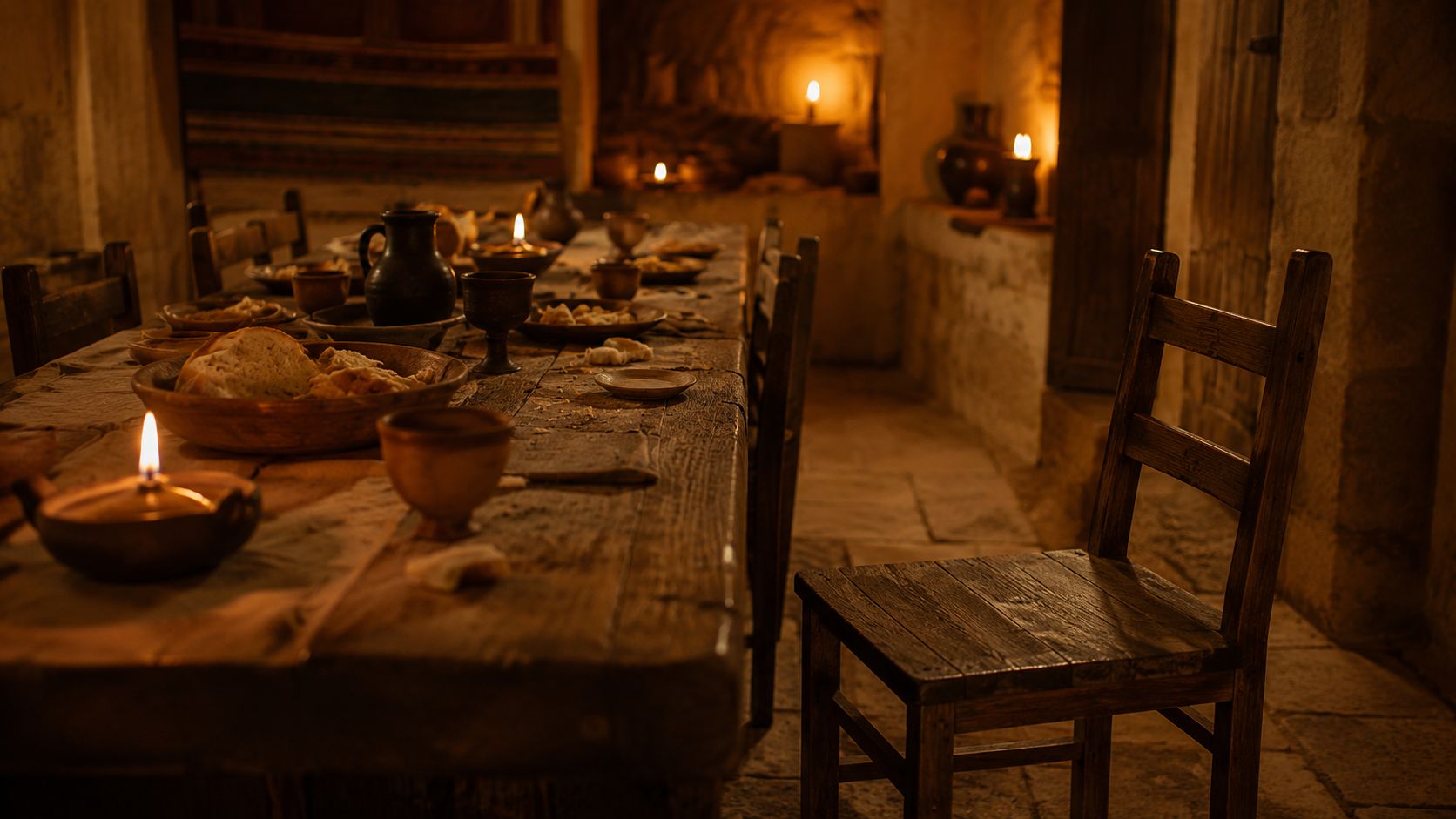
The setting is the Farewell Discourse. Jesus is sitting at the supper table on the night before he dies. He sees the fear rising in his disciples — we will be left alone — and names it for them before they have words for it. That is what love does. Love names the fear before the beloved can find the words.
The Greek word he uses for that fear is orphanos. It means a parentless child, but classical Greek already stretched the word beyond biology. Plato uses it of Socrates’ students after the cup of hemlock — disciples bereft of their teacher. John’s sense reaches both. The disciples in the upper room are about to lose the One who was father, mother, rabbi, friend, and Lord in a single body.
Most readers in any pew know some version of the orphan-condition, even if they would not have used the word for it. The empty house after the funeral. The phone that no longer rings on Sunday afternoon. The marriage that ended in a way no one expected. The friend who quietly stopped writing back. The hardest one — the silence of God in the long stretches when prayer feels like a closed door.
Jesus’ answer does not deny any of it. I will not leave you orphaned does not promise that the chair at the table will be filled, that the funeral will be reversed, or that the closed door will open in the morning. The promise is that the loss is held — held inside a larger Held-ness. The negative is met by a positive. The absence is met by an arrival. I am coming to you. What Easter 6 says to a roomful of orphan-feeling is not, you should not be sad. It is, you are not alone.
Another of the Same Kind
Then comes the careful little phrase that names the One who is coming. “The Father will give you another Advocate, to be with you forever.” The Greek behind another Advocate is ἄλλον παράκλητον — allon paraklēton. Greek is careful where English is not. ἄλλος (allos) means another of the same kind; ἥτερος (heteros) would mean another of a different kind. The Spirit who is coming is not a substitute. Not a downgrade. Not a junior associate filling in for the senior partner who has been called away. Another of the same kind as the Christ who is going.
Paraklētos — the one called alongside — carries a small constellation of meanings: comforter, helper, advocate, counselor, defense attorney. Each of them is a Christ-shaped action. Jesus comforted, helped, advocated, counseled. The Spirit who is coming continues that work in a new mode.
The Mother Who Has Always Been Coming

Two worlds meet at the supper table. The disciples around Jesus that night are Jewish men listening in Greek. In the Hebrew side of their Bible, the divine person who had been with God from the beginning — who taught the people, indwelt the soul, and made the soul a friend of God — already had a name. In Hebrew, Hokmah. In Greek, Sophia. In English, Wisdom. And the grammar in which the older covenant confessed her was unmistakably feminine.
Open Proverbs 8 and meet her: at God’s side at creation, “daily his delight, rejoicing always before him; rejoicing in his inhabited world and delighting in the human race.” The figure standing at God’s side at the foundations of the world is the figure who delights in the human race. Open the Wisdom of Solomon 7 and meet her again: “a breath of the power of God, and a pure emanation of the glory of the Almighty … In every generation she passes into holy souls and makes them friends of God and prophets.”
Read John 14 against this background and the air in the room changes. Allon paraklēton — another of the same kind — is coming to be with you forever, the Spirit of truth, who is already abiding with you and who will be in you. The Mother who has been seeking a place to dwell since before the depths were deep is the One Jesus is sending. She has not stopped passing into holy souls.
On this side of Easter, she is being given in a brand new way: as the very Spirit of the risen Christ. The Lord no longer visible to the eye is given back as a presence that lives inside the chest of the disciples, and will never be taken away. The love that ate with sinners and washed his disciples’ feet does not stop on the cross. It does not stop at the empty tomb. It comes home — into them, and into anyone he calls.
Three Doors

There are three doors through which Easter 6 walks into an ordinary congregation.
For those who feel orphaned this morning — by death, by distance, by divorce, by dementia, by the long silence of God when prayer has gone out searching and no face has come back — the promise of John 14 is not that the visible loss is reversed. The chair at the table is still empty. The promise is that the One who pitched her tent in Israel has pitched her tent in them. They are not unmothered. They are not alone. They are seen, they are loved, and grace has not finished with them yet.
For those who are mothering somebody — biological, adoptive, foster, godparent, church-aunt, the neighbor who quietly checks on the widow next door — the mothering is not their own invention. It is participation in a mothering that began before the world began. On the days when nothing is left and the mothering happens anyway — the night feedings, the bedside vigil, the conversation that should not be patient and somehow is patient — that is the Spirit of Christ in human hands. It is holy.
For the whole company walking toward Pentecost, Easter 6 is the week the church lives inside the promise. Two Sundays from now the paraments will turn red and the church will remember that the One who was promised came. The Christ who appeared to leave is sending the Spirit who is the same. The orphan-fear of Holy Saturday is met by the maternal-presence of Pentecost: she has come, she is here, she will not be taken away.
The Verse, Plain
So the verse is left where John leaves it — plain, without commentary, the most maternal sentence in the Gospels spoken on the worst night of the disciples’ lives:
“I will not leave you orphaned. I am coming to you.” John 14:18
A Closing Prayer
Lord Jesus, you who would not leave your disciples orphaned would not leave us orphaned either. You sent to us the Spirit of your own life.
Mother those of us who feel unmothered today. Strengthen those of us who are mothering. And teach all of us to live as ones into whom you have already come, and from whom you will not go.
In the name of God the Father, and of God the Son, and of God the Holy Spirit — who mothers us into the household of grace and will not be taken from us. Amen.