
Sermon
“The Knowing That Is Life”
About 7 min read
Walking with the Resurrected Jesus
Easter Season
Easter 1
Easter 2
Easter 3
Easter 4
Easter 5
Easter 6
❖
Easter 7
The Knowing That Is Life
May 17
The Sunday Between
There is a Sunday in the church year that belongs to no festival. Easter has already happened; Pentecost has not yet come. In the gospel imagination the risen Christ has been carried out of sight at the Ascension, and the Spirit who was promised has not yet arrived. The Seventh Sunday of Easter falls into that small, undecorated room — the only Sunday on the calendar whose chief identity is its in-betweenness.
It is the room of widows on a Tuesday afternoon. It is the room of parents who have buried a child. It is the room of good people in long depressions who keep getting up because that is what good people do. Most of the actual Christian life is lived in such rooms — not at the empty tomb, not in Pentecost fire, but in the held breath between the promise and its keeping.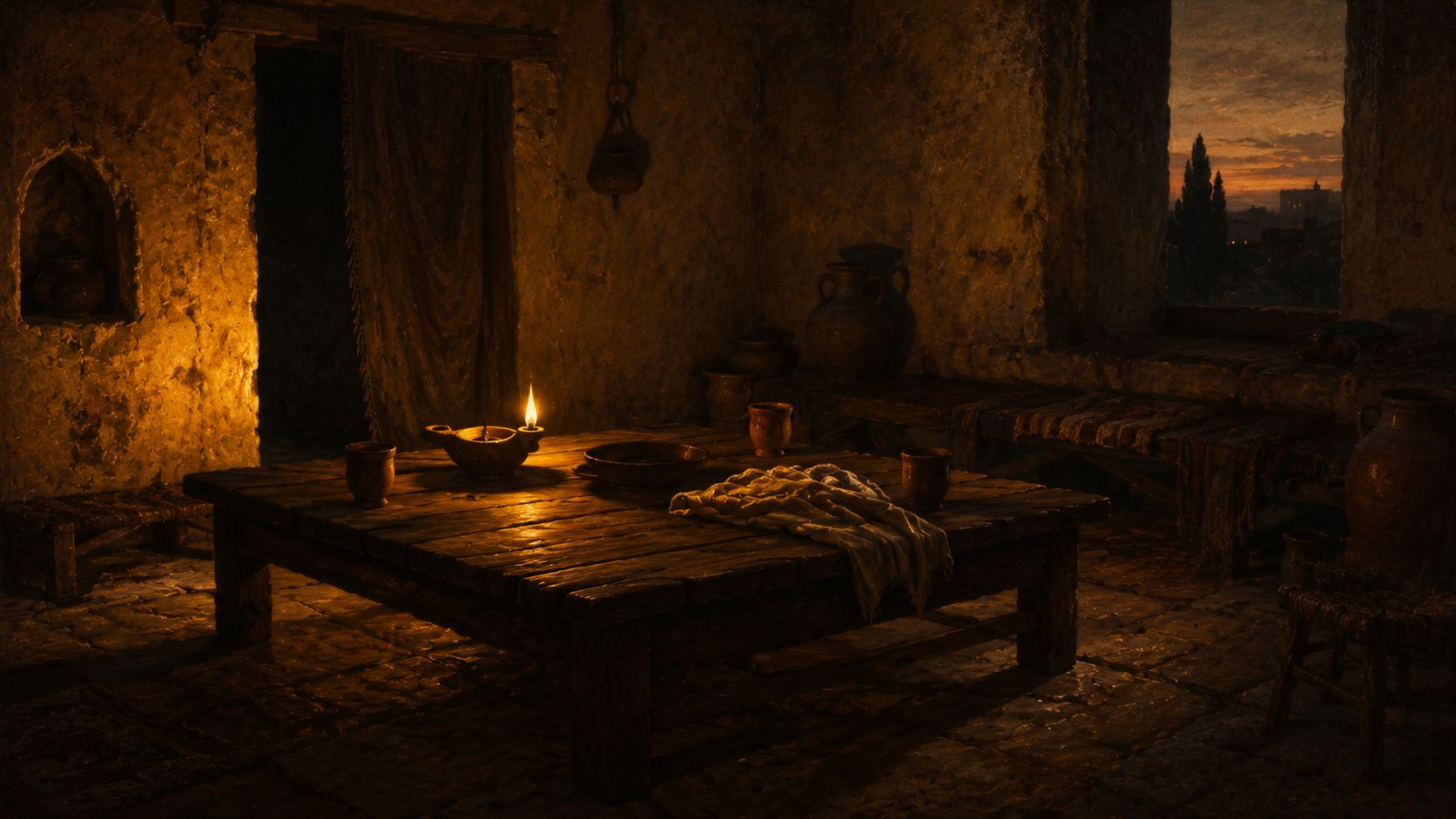
• • •
A Prayer Overheard
The scene is the night before the crucifixion. Jesus has just finished five chapters of farewell to his friends — the long Farewell Discourse that fills chapters thirteen through sixteen of John. Then, at chapter seventeen, verse one, the evangelist writes: Jesus lifted up his eyes to heaven.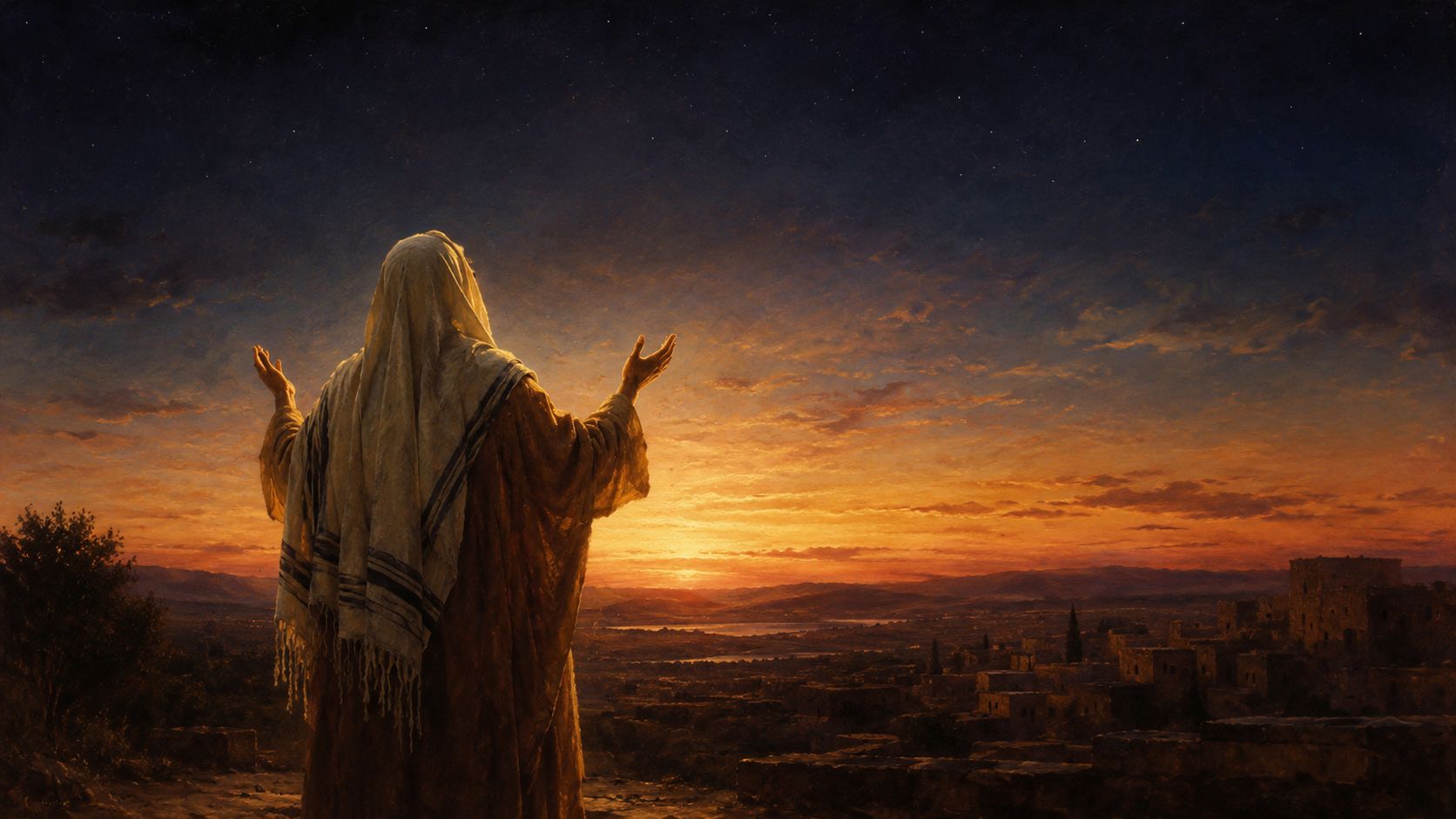
• • •
The Knowing Older Than the Upper Room
At the center of the prayer, verse three, comes the line that has held the church for two thousand years:“And this is eternal life, that they may know you, the only true God, and Jesus Christ whom you have sent.” John 17:3Notice what is not said. Eternal life is not described as a verdict cleared or an address secured. It is described as knowing. The Greek is ginōskein, and behind it stands the Hebrew yādaʿ — the verb Genesis uses when Adam knew his wife. Not the knowing of information. The knowing of persons. That knowing did not begin in the upper room. It began in a garden, where God walked in the cool of the day and asked the first question in the Bible: Where are you? It deepened with Abraham at the door of a tent. It became covenant at Sinai — I bore you on eagles’ wings and brought you to myself. It became promise through Jeremiah — a law written on the heart, that all might know him. From Adam to Israel, the God of the Hebrew Bible is the God who walks toward us. And in the upper room, on the night before he died, that same God lifted his eyes to heaven and said, Father, the hour has come. When the Johannine Jesus calls eternal life knowing, he is pointing to himself — to meeting him as the One who already knows the disciple by name. Two of his closest friends preach this for us.
• • •
Thomas: The Knowing That Breaks Open
The first is Thomas. The week after Easter, the others told him, “We have seen the Lord.” And Thomas — the one who needed the data — said, “Unless I put my finger in the mark of the nails and my hand in his side, I will not believe.”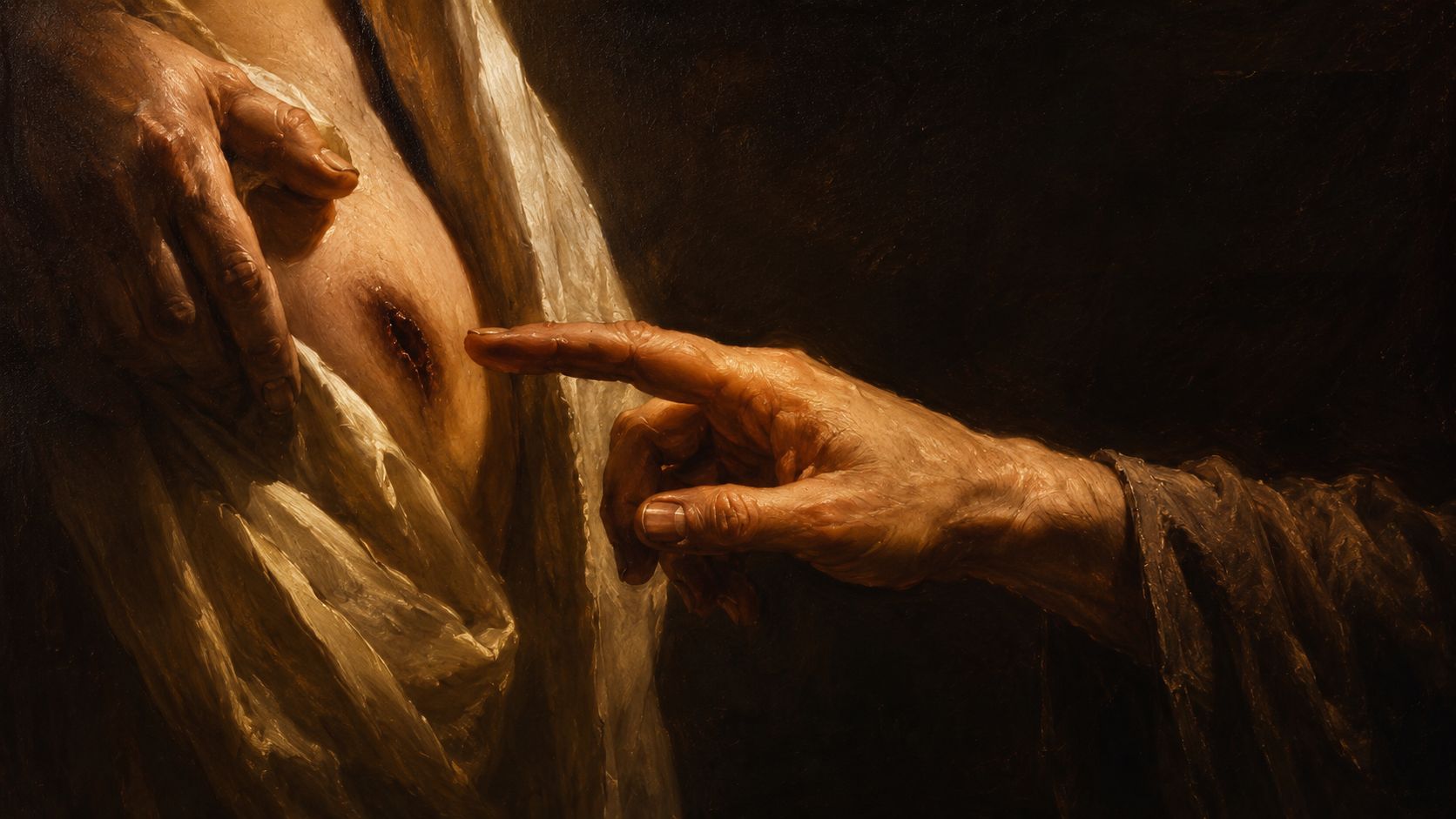
• • •
Peter: The Knowing That Forgives
The second is Peter. Three denials, by a charcoal fire in the high priest’s courtyard. Then, in the last chapter of John, the risen Jesus stands on the shore of the Sea of Tiberias beside another charcoal fire. The Greek word for charcoal fire — anthrakia — appears in only those two places in the New Testament. John means us to remember the first fire when we read about the second.“The intercession did not stop at the cross. The Christ at the Father’s right hand is praying it now — by name — over every disciple who has come after the room.”
Beside that second fire, the risen Jesus asks Peter three times — once for each denial — do you love me? On the third asking, Peter, undone, says the deepest thing he has ever said: Lord, you know everything. You know that I love you. That is the knowing that is eternal life. Not the man knowing the doctrine. The man knowing himself known, down to his worst night, and forgiven there. For Thomas, the knowing broke open as confession. For Peter, it broke open as forgiveness.
• • •
Kept by the Prayer
So salvation, on this in-between Sunday, is not a transaction completed once. It is a relationship still being lived into. And what keeps a disciple in it is not the strength of one’s own grip. It is the strength of the Prayer being prayed over one’s life. When faith goes quiet, the prayer is still being prayed: Holy Father, keep them in your name. The disciple is kept by intercession before being kept by intention. The in-between is not empty. It is full of a Prayer. The first question of the Bible is still the most patient question God knows how to ask. Where are you? The honest answer — not where one ought to be, but where one actually is — is the beginning of the knowing that is life. Spoken at a kitchen table, in a car in a hospital parking lot, in a pew before the lights come on next Sunday, that answer opens a small door in the in-between. And the One who has been praying through six weeks of resurrection appearances is praying through that door, too. Next Sunday the paraments will turn red. The Spirit will come to make the prayer the disciples have been overhearing into the prayer that is being prayed inside them. The knowing that is eternal life takes up residence in flesh and blood — not as the gold star at the end of the race, but as the road itself.A Closing Prayer
Holy Father, draw us closer to your Son. When our faith grows quiet, keep us in your name.
With Thomas, help us say, “My Lord and my God.” With Peter, help us say, “Lord, you know that we love you.”
By your Spirit, give us the life that comes from knowing you — in the name of the Father, and of the Son, and of the Holy Spirit. Amen.