
“Sent Into the Harvest”
Compassion Before Commission
Before Jesus sends anyone anywhere, he looks at a crowd. Matthew sets the scene with a summary of relentless activity: Jesus went about all the cities and villages, teaching in their synagogues, proclaiming the good news of the kingdom, and curing every disease and every sickness. And then, in the middle of all that motion, he stops. He lifts his eyes to the ordinary people pressing in around him, and something turns over inside him.
“When he saw the crowds, he had compassion for them, because they were harassed and helpless, like sheep without a shepherd.”Matthew 9:36 (NRSV)
The word translated compassion is the strongest the Greek language possessed — esplanchnisthē, from the noun for the inner organs. It does not describe pity felt at a safe distance but a churn in the gut, a mercy that moves the body. The two words beneath it are sharper than most English Bibles let on. Harassed renders a verb meaning torn or worried at, like a fleece snagged and pulled on thorns; helpless pictures a body thrown down, collapsed in a field. Jesus looks at the religious crowd of Galilee — people who kept the feasts and attended synagogue and were doing their best — and sees a flock that has been mauled and abandoned, because the shepherds charged with feeding them had fed on them instead. The image reaches back through Israel’s memory: Moses praying that the people not be left as sheep without a shepherd (Numbers 27:17), Ezekiel’s oracle against shepherds who pastured only themselves (Ezekiel 34). Mission, in Matthew, does not begin with a strategy. It begins with a Shepherd whose stomach turns at the sight of the unshepherded.
The Prayer That Is Dangerous to Pray

Out of that compassion comes a command, and it is not the one a reader expects. Jesus does not tell the disciples to organize or to recruit. He tells them to pray.
“The harvest is plentiful, but the laborers are few; therefore ask the Lord of the harvest to send out laborers into his harvest.”Matthew 9:37–38 (NRSV)
The picture has shifted from a torn flock to a ripe field, and the shift is itself a quiet revelation: the same crowd that, seen one way, is sheep with no shepherd is, seen another way, a harvest standing white and ungathered. The problem is never barren ground; the problem is a shortage of hands. And the first thing the disciples are told to do about it is to beg the Owner of the field to supply them. One verb in the command carries a warning. Send out translates ekballō — the same forceful word used elsewhere for driving out demons, for thrusting someone through a door. Pray, Jesus says, that God would propel laborers into the harvest, because the field will otherwise be admired and never entered. It is a dangerous prayer. To ask the Lord of the harvest for workers is to ask him to do whatever it takes to bring the crop in — and the next sentence reveals exactly what that turns out to mean.
The Answer Walks Out the Door

There is a chapter division between Matthew 9 and Matthew 10, but there is no seam in the story. The words pray the Lord of the harvest to send out laborers are barely finished when Matthew writes that Jesus summoned his twelve disciples, gave them authority, and sent them out. The ones told to pray for workers become the workers. The prayer is scarcely off their lips before they are its answer. It is one of the quiet laws of the kingdom: God so often responds to the prayer for laborers by sending the very people who prayed it.
Where they are sent matters too. For now the Twelve go only to the lost sheep of the house of Israel; the mission that will one day reach every nation begins narrowly, at home, among their own. And the message is not their own cleverness but a single announcement — the kingdom of heaven has come near. They are heralds before they are anything else, sent to say that God’s reign has arrived and to make it visible by healing whatever it touches. Long before, at Sinai, God had told this same people that they were to be a kingdom of priests, a holy nation set in the world for the world’s sake (Exodus 19:6); now that ancient vocation is handed, in miniature, to twelve men with a message and a road.
Notice what is placed in their hands before they go. He gave them authority — over unclean spirits, over every disease. They do not set out on their own strength, peddling their own opinions; they carry something that was first given to them. The healing Jesus had been doing himself he now shares with twelve unremarkable men — fishermen, a tax collector, a zealot — and the instruction that follows ought to be carved over the door of every church.
“You received without payment; give without payment.”Matthew 10:8 (NRSV)
In Greek it is two words doubled — dōrean elabete, dōrean dote. Freely received; freely give. Everything the disciples have to hand out, they were first handed. The authority is not theirs, the healing is not theirs, the gospel itself is not theirs; all of it was gift, and the only faithful way to carry a gift is to keep giving it away. The moment a church begins to charge admission to grace — attaching a price, a condition, a test of worthiness to what it received for nothing — it has quietly changed sides and become the bad shepherds all over again.
The Field Outside the Door
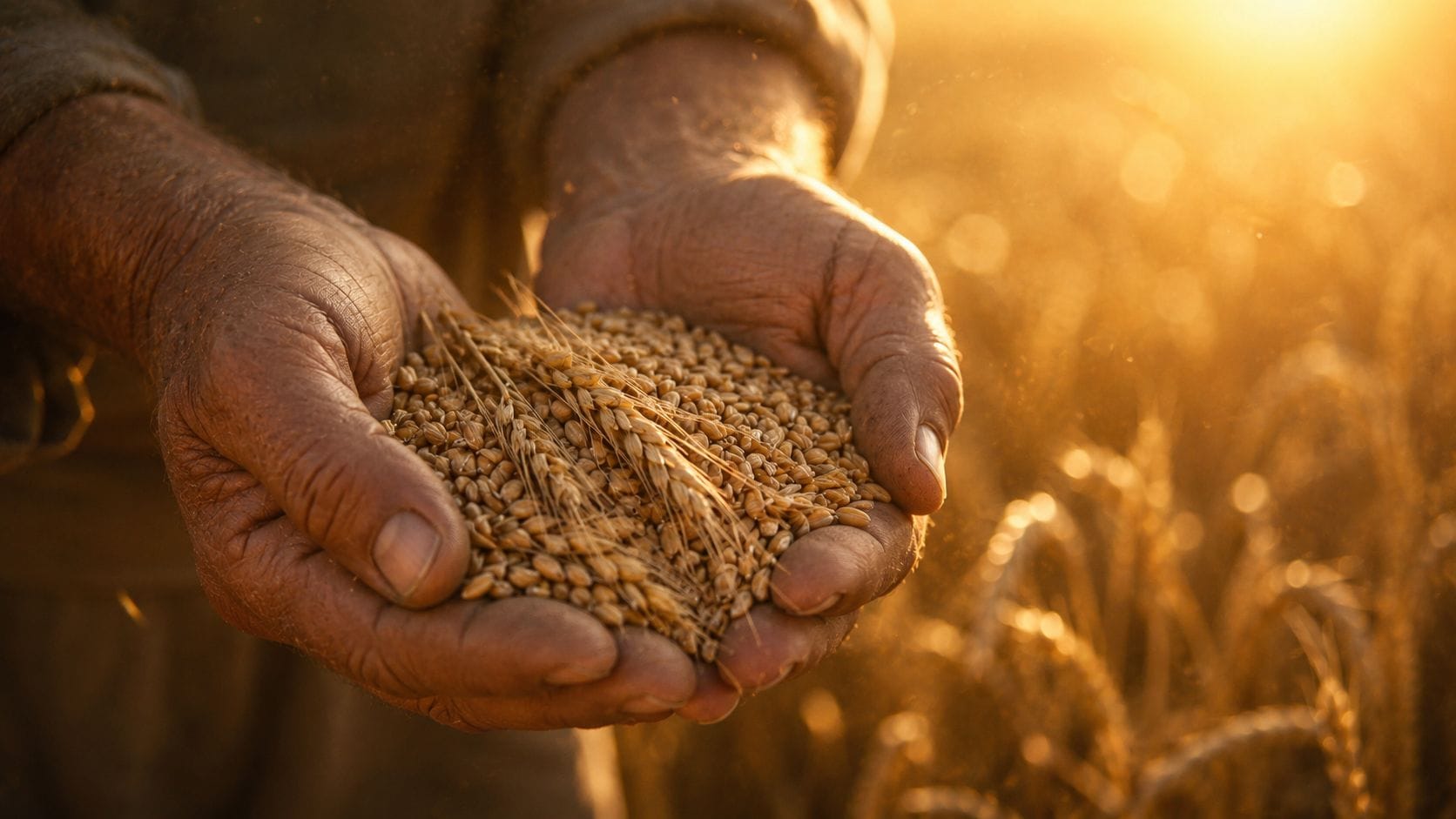
The crowds Jesus saw are not a first-century phenomenon. They stand in line at the pharmacy and the post office; they are the neighbor whose marriage is quietly coming apart, the coworker carrying something no one has been told, the child who has never once been told that God loves them. They do not look like a harvest. They look like ordinary, tired people. But Jesus did not see a problem when he looked at the crowd, and he did not see a threat; he saw a field that was ready, and he saw it through eyes of compassion before he ever spoke of sending. The first thing the church owes the people around it is therefore not a program but that same gut-level mercy — a willingness to look at a town and feel something turn over, because so many are living like sheep no one is feeding.
The second thing it owes them is the gift it was given — not a sales pitch, but the same welcome that was extended to it when it had nothing to offer in exchange. Freely you received; freely give. And the strange arithmetic of the harvest still holds: the laborers are the ones who prayed for laborers. The Lord of the harvest looks at every congregation and answers its petition for workers by pointing, gently, to the people already in the pews — who need no title or ordination to carry out the door what was freely placed in their hands.
A Closing Prayer
Lord of the harvest, you looked on the crowds and your heart broke for them, and you have looked on us the same way. Thank you for shepherding the very ones the world left lying in the field. Give us your eyes for the people around us — eyes that see a harvest where others see only tired strangers — and move us, as you were moved, in the gut. Having freely received all that we have, make us brave enough to freely give it: to carry your mercy out the door into lives that have waited too long to hear that they are loved.