
“But Who Do You Say?”
The Scale Comes Off the Table
For two Sundays now we have watched faith get weighed.
Out on the water, in the dark, Peter heard the verdict: you of little faith. On the road out of Tyre, a Canaanite mother heard hers: great is your faith. Little faith inside the family. Great faith outside it.
We could be forgiven for thinking the scale was the story.
This morning Matthew takes the scale off the table.
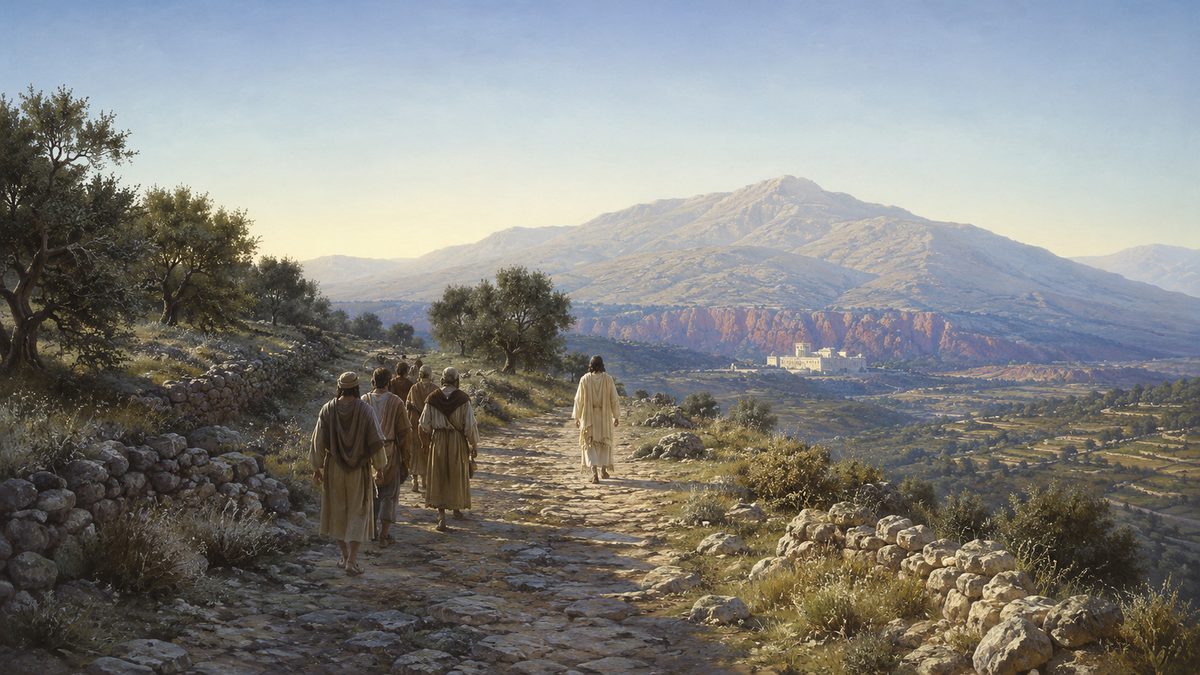
He takes them north instead — twenty-five miles up into the foothills of Mount Hermon, to Caesarea Philippi, the far pagan edge of the map, and the last place this story stops before it turns toward Jerusalem.
Among the Shrines
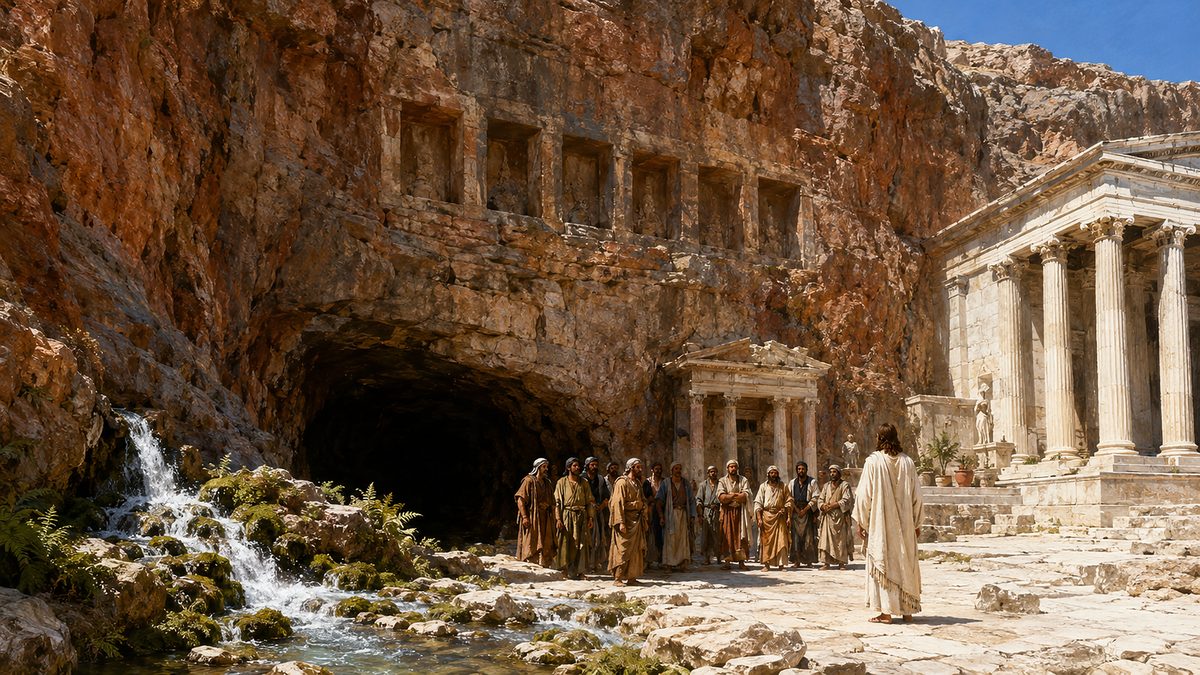
Of all the places to ask who he is, he picks that one.
There is a cliff there — a rust-streaked wall of rock with a cave at its foot, and out of that cave comes one of the springs of the Jordan — dark water no one has ever found the bottom of. Beside the cave the Greeks had cut a shrine to the god Pan, with niches for whatever other god you cared to carry up the hill. And facing it all, Herod had built a white marble temple to Caesar Augustus — son of a god, lord of the world.
Living rock. Water with no bottom. An old god. A new one.
In front of all that, Jesus asks, Who do people say that the Son of Man is?
That one is easy, and they answer it easily. John the Baptist. Elijah. Jeremiah. One of the prophets. Every answer respectable. Every answer past tense — a great man, come back. And every one of them is somebody else’s.
Then the question turns and looks at them.
“But who do you say that I am?”Matthew 16:15 (NRSV)
The Answer That Was Given
That little word but is the hinge of Matthew’s Gospel. Everything after it is the road to Jerusalem.
And before we admire Peter, hold on to one detail. Five verses earlier, in an argument about bread, Jesus had turned to these same men and said, you of little faith. These are the ones who get the question. These are the ones who get it right.
“You are the Messiah, the Son of the living God.”Matthew 16:16 (NRSV)
It is the first time in this Gospel that anyone says Messiah to his face. And listen to where he says it: the living God — spoken in the shadow of a shrine to a god who never was, and a temple to an emperor fifteen years in his grave.
Then Jesus does something he does nowhere else: he blesses one named human being.
“Blessed are you, Simon son of Jonah! For flesh and blood has not revealed this to you, but my Father in heaven.”Matthew 16:17 (NRSV)
Flesh and blood — the old phrase for merely human means. Peter did not reason his way there. He did not out-believe the woman on the Tyre road or out-think the men beside him.
On This Rock
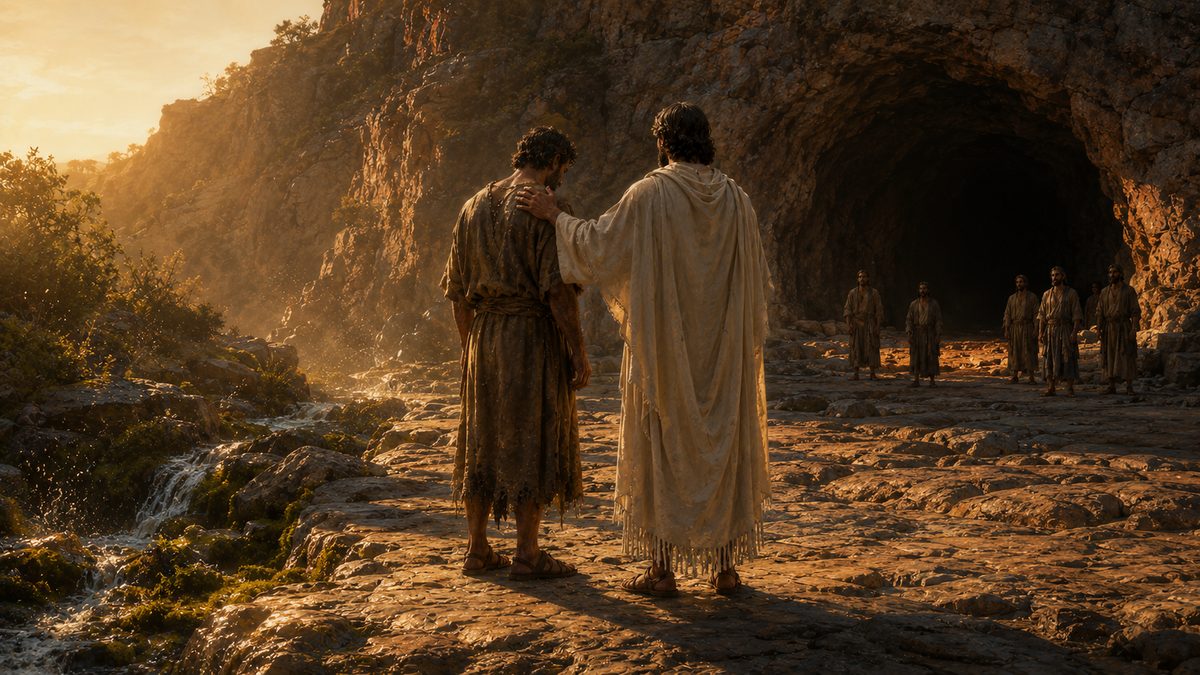
Peter says you are, and Jesus says it back to him. You are Peter — Rock — and on this rock I will build my church.
Notice who does the building. I will build. Peter is not the architect; he is quarry stone. Which is exactly where Isaiah points this morning, speaking to a tired community sure it had no future: Look to the rock from which you were hewn. You did not make yourselves. You were cut out of something.
And the gates of Hades will not prevail against it. Hades is not hell; it is the realm of the dead, the place that keeps everyone it takes. Gates are not weapons — gates are what you shut when something is coming for you. He says that in front of a hole nobody had ever found the bottom of. In that sentence, death is the one on defense.
And then Matthew refuses to let us have a hero. Five verses later Peter takes him aside to explain that the cross must be a mistake, and hears, Get behind me, Satan! You are a stumbling block to me. Next Sunday’s reading — same man, same chapter, rock and stumbling stone inside five verses.
Which tells us what the promise rested on all along. Jesus builds his church on a man he already knows will fail him — and says death will not overpower it anyway. The church was never guaranteed by the quality of its stones.
The Question That Remains
Paul closes the ledger. Think with sober judgment, he writes to Rome, each according to the measure of faith that God has assigned. Assigned. Not earned, not graded on a curve against the person in the next pew. What you were given was given — and given for the body’s use, not for comparison.
So the weighing is over. The question that is left is not how much — it is whom.
And it comes to us the way it came to them. In the Greek, that you is plural: all of you. He is not working the room one soul at a time; he is asking a congregation.
He will not take a relayed answer, either. Not what your parents said. Not what Roswell assumes. Not the shrines — and we have our own cliff full of them, each one promising to hold whatever you set on it.
But who do you say that I am?
And if some answer rises in you this morning — even a small one, even a shaky one, even one you would rather not examine too closely — then hear the rest of what he said to Simon. Flesh and blood did not give you that. It came down. It was a gift before it was ever a sentence.
The scale is gone. The answer came down. And the rock under this church was never the man who confessed — it is the One he confessed.
That is what he is building on. Not on how well you hold it. On the fact that it was given to you at all — and the One who gave it is not finished.
A Closing Prayer
Lord Jesus, you asked this question in front of every other god on the cliff, and you ask it here. You do not weigh faith the way we weigh it. Teach us to stop weighing and start answering. Where our words are secondhand, make them our own. Where our faith is small, remind us what it is fastened to. Give us what flesh and blood cannot give, and build your church on the answer you yourself supply — in this town, in this house, in this one life. You are the Messiah, the Son of the living God. Do not forsake the work of your hands.
In the name of the Father, and of the Son, and of the Holy Spirit. Amen.